
Struggling to find standard bucket dimensions1? Ordering the wrong size wastes time and money. I'll break down the exact sizes so you can order with confidence every time.
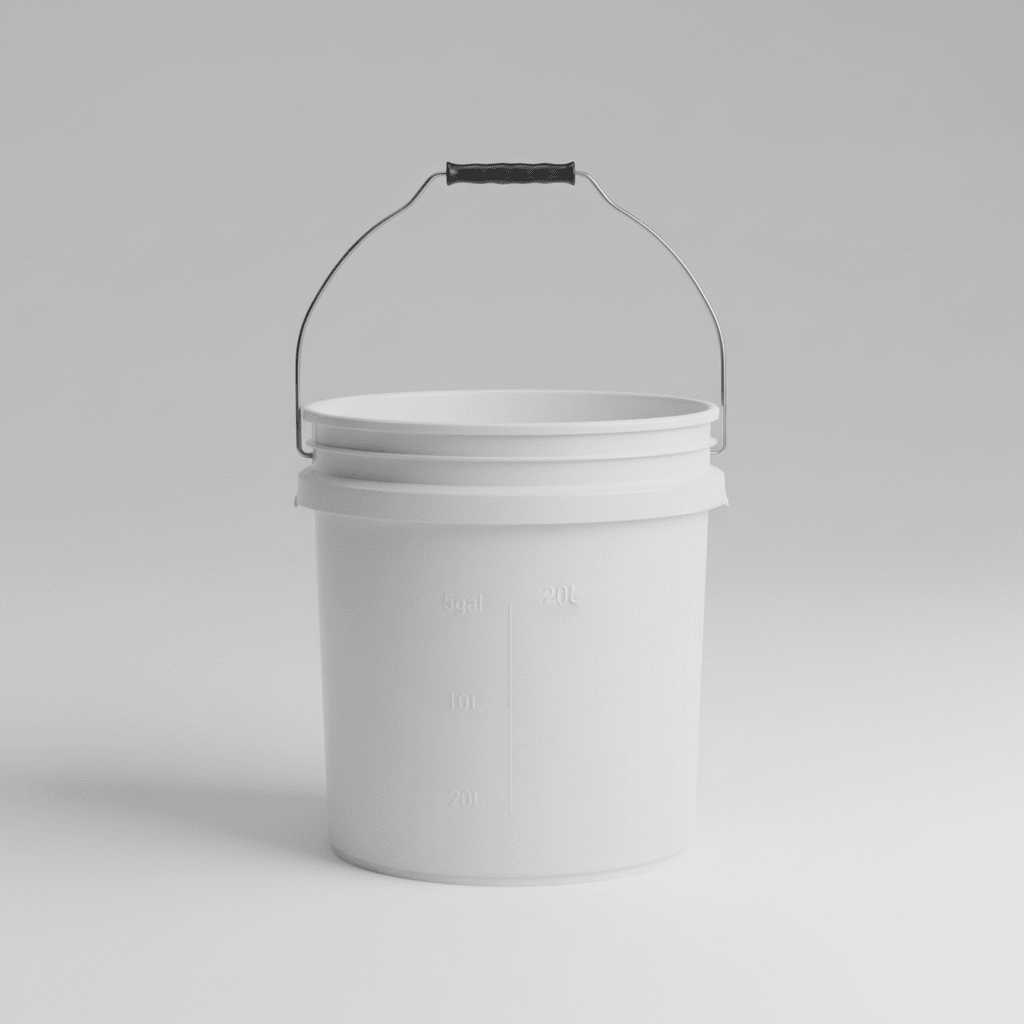
A standard 5-gallon (or 20-liter) bucket is typically about 14.5 inches (368mm) tall with a top diameter of roughly 12 inches (305mm). However, these dimensions can vary significantly depending on whether the bucket is an American or European style, affecting lid fit2 and seal.
You might think a 5-gallon bucket3 is just a 5-gallon bucket3, but there’s a lot more to it. In my 20 years in this industry, I've seen countless clients run into trouble by overlooking regional differences. The size is just the beginning. The real story is in the style, the seal, and where your products are headed.
Let's dive deeper into the two main types of buckets you'll find on the global market. Understanding these differences is key to avoiding costly shipping mistakes4 and ensuring your product arrives safely.
What are the dimensions of American-style plastic buckets?
Need buckets for the North or South American market? Using the wrong style can lead to sealing problems and product loss. I'll cover the standard American bucket so you get it right.
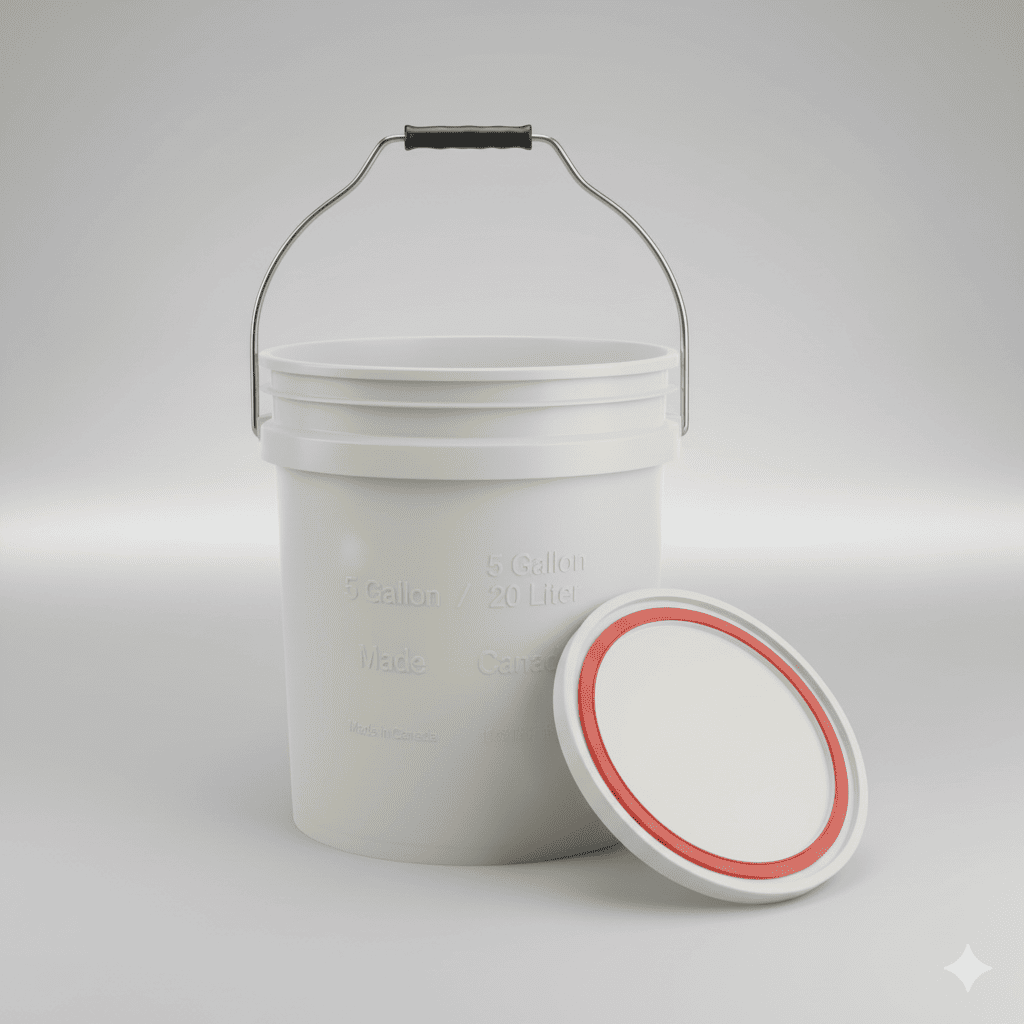
American-style 5-gallon bucket3s generally have a top diameter of about 12 inches (305mm) and a height of around 14.5 inches (365mm). Older designs, particularly from Canada, are thicker (around 90mil) and often need a rubber gasket5 in the lid to create a proper seal.
From my experience, the American-style bucket is the go-to choice for anyone selling products in the United States, Canada, Mexico, and most of South America. It's a design that businesses in these regions know and trust. However, not all American-style buckets6 are made the same.
I once had a client in Ghana who was shipping paint to the U.S. They were using locally sourced buckets and had high rates of leakage. The problem was their buckets, while American in style, didn't have the right lid seal for the journey. We switched them to a modern design, and their problem vanished. This shows how important the details are.
Regional Use
This bucket style dominates the Americas. We also see it used by companies in places like Ghana and Morocco, but specifically for products they plan to export to the Americas. This ensures their packaging is compatible with the destination market's expectations and handling equipment.
Design and Sealing
There are two main versions you should know about:
- Old-Style: Common in Canada, these buckets have very thick walls, sometimes up to 90mil. They are heavy and durable but almost always require a separate rubber gasket5 inside the lid to be leak-proof. Without it, the seal is not reliable.
- New-Style: Most modern Chinese manufacturers, including us, use newer molds. These buckets have slightly thinner walls (around 78mil) but are engineered for strength. The lid and bucket rim are designed to create a tight seal without needing an extra gasket, which saves costs and simplifies the process.
Here’s a quick comparison table:
| Feature | Old-Style (e.g., Canada) | New-Style (e.g., China) |
|---|---|---|
| Wall Thick | ~90mil | ~78mil |
| Gasket Needed | Yes, for a good seal | No, integrated seal |
| Weight | Heavier | Lighter |
| Cost | Higher | More cost-effective |
What are the dimensions of European-style plastic buckets?
Shipping products to Australia, Asia, or Europe? An American-style bucket might not be the best fit. I'll show you the European standard to ensure your packaging is globally compliant.
A European-style 20-liter bucket (the 5-gallon equivalent) often has a wider mouth, with a top diameter near 12.6 inches (320mm), and is slightly shorter at about 13.8 inches (350mm). This design is common in Europe, the Middle East, Southeast Asia, and Australia.
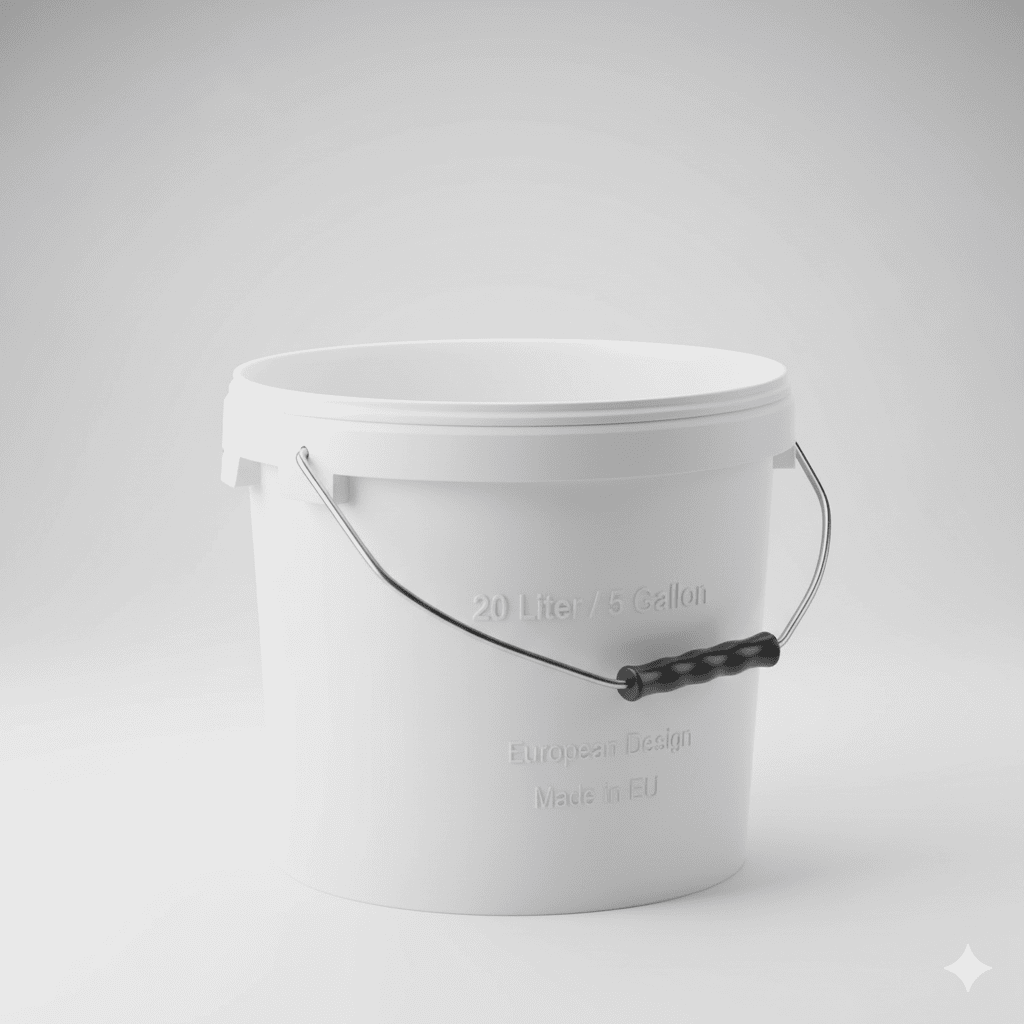
The "Euro bucket" is what I recommend for any client targeting markets outside of the Americas. Its distinct shape is recognized and preferred in a huge part of the world. The wider opening can be more practical for products like coatings, adhesives, and food ingredients, as it allows for easier access and mixing.
The market for this bucket style is vast. We ship them to clients everywhere from Australia and Southeast Asia to the Middle East and all across Europe. It’s a versatile and widely accepted standard.
Key Markets
- Australia & New Zealand: This is the standard bucket style.
- Southeast Asia: Countries like Malaysia, Singapore, and Thailand widely use this format.
- Middle East: A primary choice for many industries in this region.
- Europe: The design originated here and remains the dominant standard.
Design Features
The primary difference is the bucket's profile—wider and shorter. This change in geometry affects how buckets are palletized and stored, so it's a crucial factor for logistics planning. Like modern American buckets, our European-style buckets7 are made with advanced molds8. They feature an integrated sealing system in the lid, so you don't need a separate gasket. This not only improves reliability but also streamlines your supply chain. Poorly made buckets from some regions can have sealing issues, but a well-made Euro bucket from a quality supplier will be completely secure.
| Dimension | European Style (20L) | American Style (5-Gal) |
|---|---|---|
| Top Diameter | ~12.6 in / 320mm | ~12 in / 305mm |
| Height | ~13.8 in / 350mm | ~14.5 in / 365mm |
| Profile | Wider and Shorter | Taller and Narrower |
What’s the difference between the two plastic bucket styles9?
Choosing the wrong bucket style can be a costly mistake. It can lead to shipping damage10, rejected shipments, and unhappy customers. I’ll clarify the key differences to help you choose wisely.
The main difference is their shape and primary market. American-style buckets6 are taller and narrower, used in the Americas. European-style buckets7 are shorter and wider, used in Europe, Asia, and Australia. This affects everything from lid compatibility to shipping logistics and pallet configuration11.
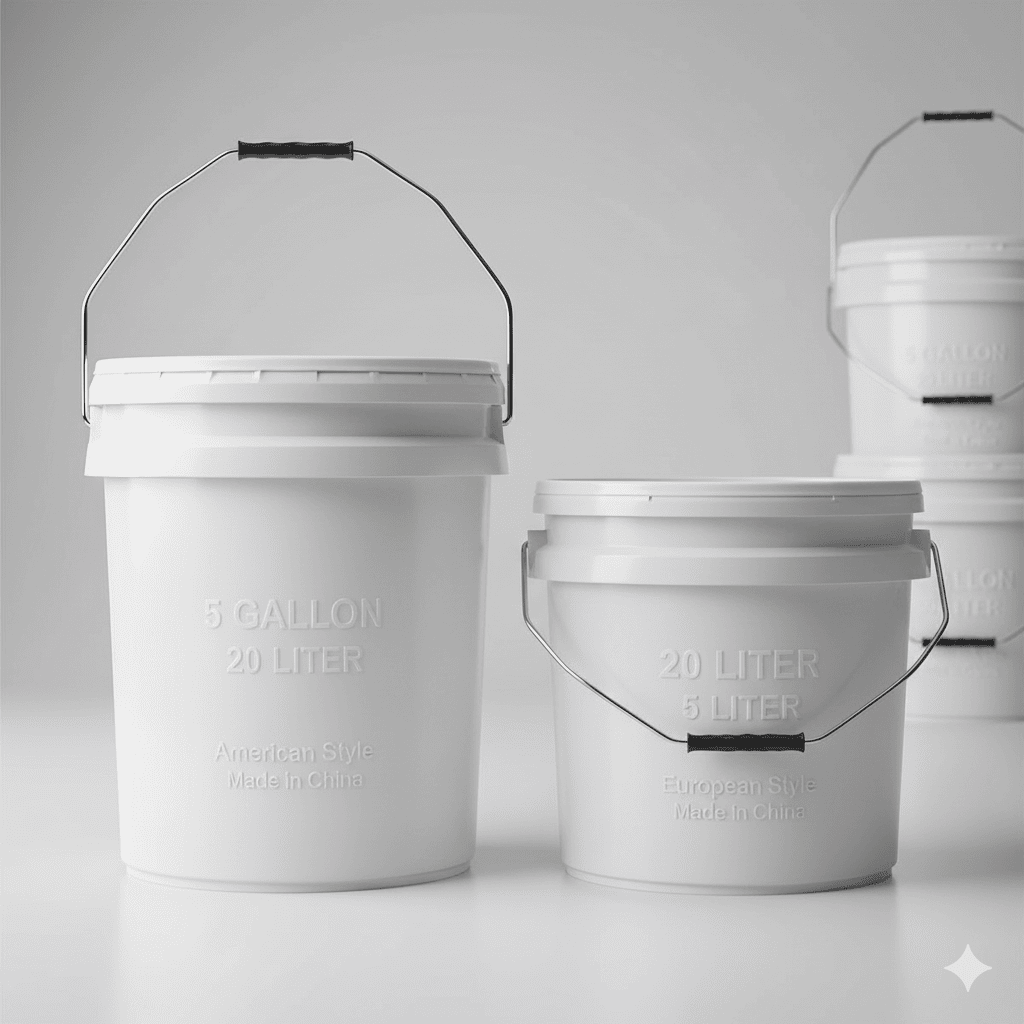
I can't stress this enough: the two styles are not interchangeable. I once worked with a large paint company in Chile that accidentally ordered a container of European-style lids for their American-style buckets6. The lids didn't fit, and their entire production line stopped. It was a simple mistake that cost them thousands in delays.
The differences go beyond just dimensions. They reflect different industrial standards and logistical practices. Choosing the right one is about ensuring your product not only gets to its destination safely but also fits seamlessly into your customer's workflow.
Functional Comparison
Let's break it down into the three most important areas:
-
Dimensions and Stacking:
- American: Taller, smaller footprint. You can fit more on a pallet if stacking height isn't an issue.
- European: Shorter, wider footprint. This can make them more stable, but you might fit fewer on a pallet depending on the configuration.
-
Lid and Seal:
- Lids are not cross-compatible. An American lid will not seal a European bucket, and vice versa.
- Modern buckets of both styles (like ours) have integrated seals, while older American designs often need a gasket. This is a crucial quality point.
-
Market Acceptance:
- Using the style your target market expects is vital. It shows you understand their local standards. Sending an American-style bucket to a German customer, for example, might seem unprofessional and could cause issues with their automated filling or handling systems.
Here's a simple table to summarize the core differences for a purchasing manager:
| Aspect | American Style | European Style |
|---|---|---|
| Primary Market | North & South America | Europe, Asia, Australia, Middle East |
| Profile | Taller & Narrower | Shorter & Wider |
| Lid Fit | Specific to American style | Specific to European style |
| Logistics | Taller stacks, smaller pallet footprint | More stable base, wider pallet footprint |
Which plastic bucket is the right choice for my business?
Worried about product damage during shipping? High damage rates from a poor supplier can destroy your profit margins. I'll explain why sourcing location is as important as the bucket style itself.
The right bucket depends on your target market and quality needs. Modern Chinese-made buckets offer a superior choice, with advanced molds8 for excellent sealing, better quality control12, and competitive pricing for both American and European styles compared to other regions.
Over the years, I've seen buckets from all over the world. While you can get them made in many places, the quality varies dramatically. For instance, I've noticed that buckets sourced from some factories in Africa and the Middle East tend to have higher rates of damage during shipping. This is often due to older molds or less stringent quality control12.
On the other hand, the manufacturing landscape in China has completely changed. We've invested heavily in technology. For example, our factories in Shandong and Jiangsu are known for producing high-quality buckets at very competitive prices. We use new, precision molds that create a perfect seal without gaskets. This is a huge advantage over the old, thick-walled buckets that still require them.
Why Source from a Quality Chinese Manufacturer?
- Advanced Molds: We use new tooling that ensures consistency and a perfect, leak-proof seal every time. Factories in some other regions, like Hebei province, are known to use inferior molds, which leads to poor sealing. Quality manufacturers have this figured out.
- Better Quality Control: In our plants, we have experienced quality control12 staff on every shift. We perform drop tests, seal tests, and load tests to ensure our buckets meet international standards. This drastically reduces shipping damage10.
- Cost-Effectiveness: Because of the scale and efficiency of factories in places like Shandong and Jiangsu, we can offer superior quality at a lower price point. You don't have to choose between saving money and protecting your product.
Here’s a quick regional quality overview based on my experience:
| Region | General Quality & Characteristics |
|---|---|
| China (Shandong, Jiangsu) | Excellent quality, new molds, gasket-free seal, good price. |
| China (Hebei) | Lower price, but often poor sealing due to inferior molds. |
| Canada | Durable but old-style, heavy, and requires a gasket. |
| Africa/Middle East | Quality can be inconsistent, leading to higher damage rates. |
For any procurement manager looking to reduce risk and improve their bottom line, partnering with a proven, high-quality Chinese manufacturer is the smartest move.
Conclusion
A 5-gallon bucket3's size depends on its style—American or European. Choosing the right one for your market and sourcing from a quality manufacturer is key to protecting your product.
Discover how different bucket dimensions can impact shipping and product safety. ↩
Understanding lid fit is essential for preventing leaks and ensuring product integrity during transport. ↩
Understanding the dimensions of a 5-gallon bucket is crucial for accurate ordering and avoiding costly mistakes. ↩
Avoid costly shipping mistakes by understanding the importance of choosing the right bucket style. ↩
Learn how rubber gaskets enhance the sealing of buckets and prevent leaks. ↩
Explore the unique features of American-style buckets to ensure compatibility with your products and markets. ↩
Learn about European-style buckets to ensure your packaging meets international standards and expectations. ↩
Explore how advanced molds improve bucket quality and sealing capabilities. ↩
Understanding different bucket styles can help you select the right one for your market. ↩
Learn how selecting the right bucket can significantly reduce shipping damage. ↩
Learn how bucket shape impacts pallet configuration for efficient shipping and storage. ↩
Discover best practices in quality control to ensure the reliability of your buckets. ↩