SPILL CONTAINMENT PALLETS
Heavy-duty HDPE spill containment pallets for drum storage, IBC tanks, chemical handling, and industrial liquid leak control. Available in single drum, double drum, 4-drum, IBC, high-profile, and low-profile designs to support safer secondary containment in warehouses, factories, and hazardous liquid storage areas.
PRODUCT
CATEGORIES
Purpose-built HDPE spill containment pallets for drum storage, IBC storage, chemical handling, and industrial liquid leak control. Choose by drum quantity, IBC capacity, sump volume, and handling method.
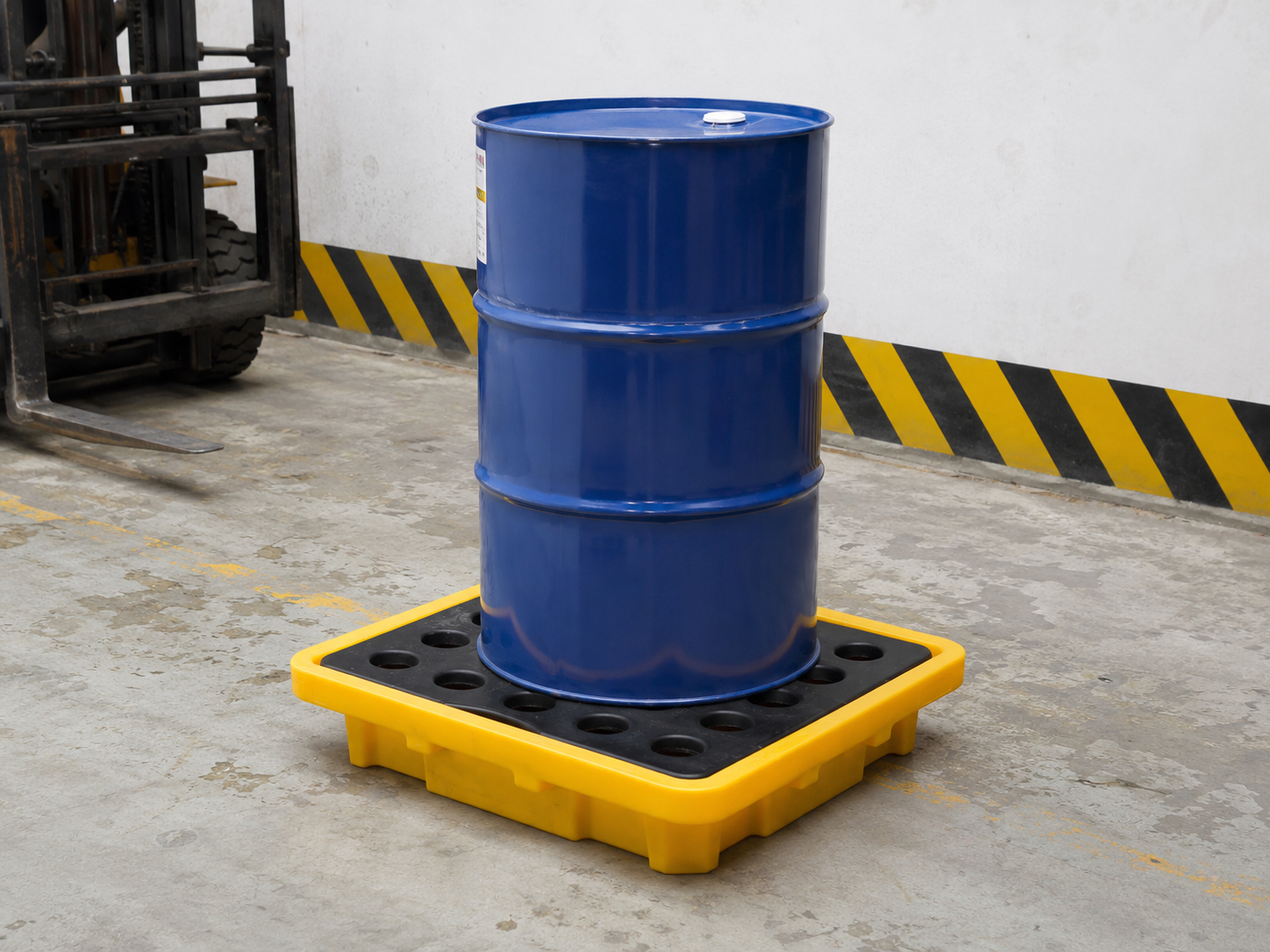
Single Drum Spill Pallet
Compact HDPE spill containment pallet designed for one 55-gallon drum. Ideal for small chemical storage areas, maintenance stations, oil dispensing points, and workshops where space is limited but leak control is still required.
- Designed for One 55-Gallon Drum
- IBC Single & Double Pallets
- Removable Anti-Slip Grate for Easy Cleaning
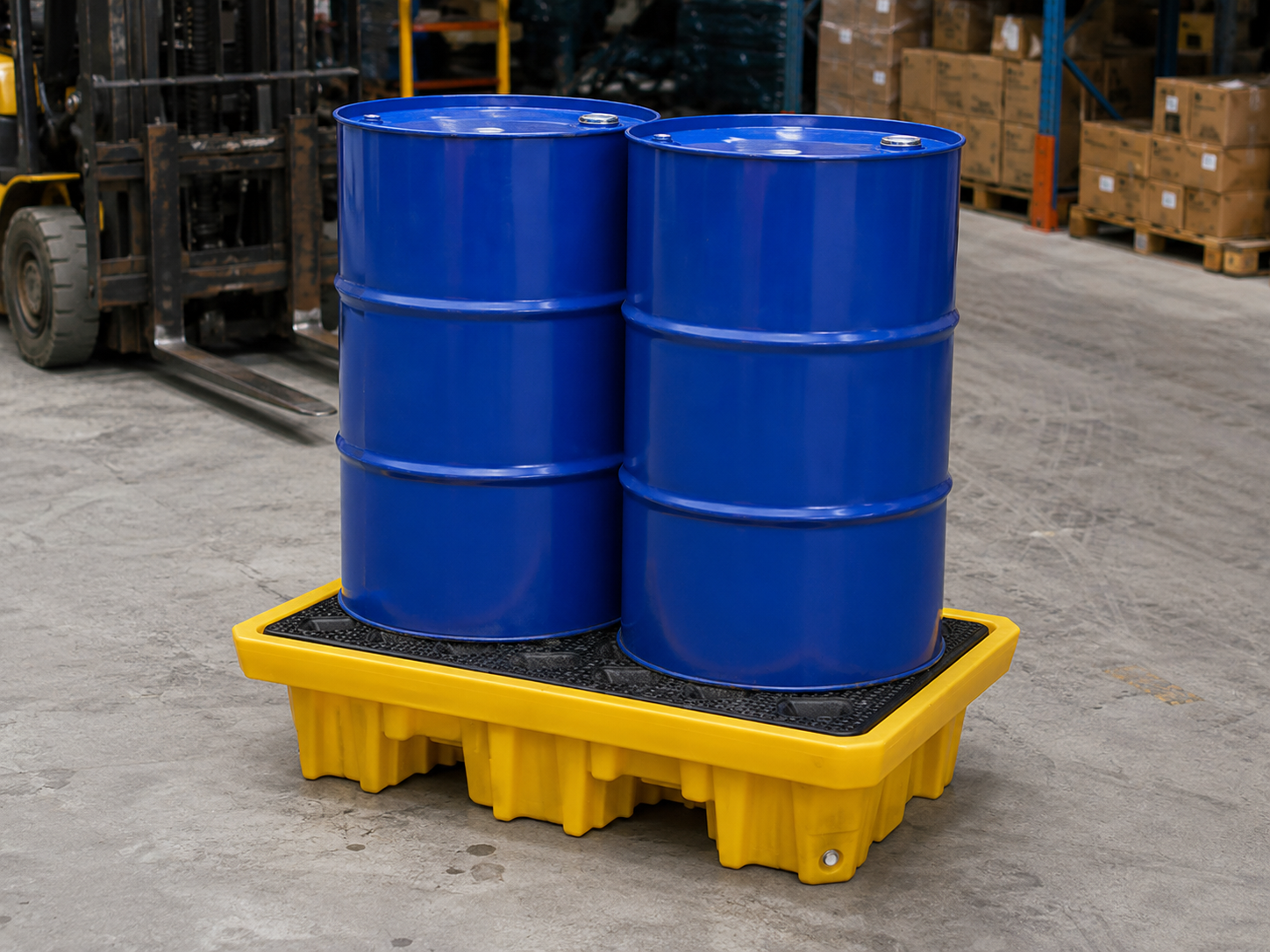
2 Drum Spill Pallet
Heavy-duty 2 drum spill pallet for storing two chemical drums, oil drums, or hazardous liquid containers. The integrated sump base helps collect leaks and drips, while the removable grate keeps drums raised above collected liquid.
- Holds Two Standard 55-Gallon Drums
- Integrated Spill Sump for Leak Collection
- Forklift-Friendly Base Options Available
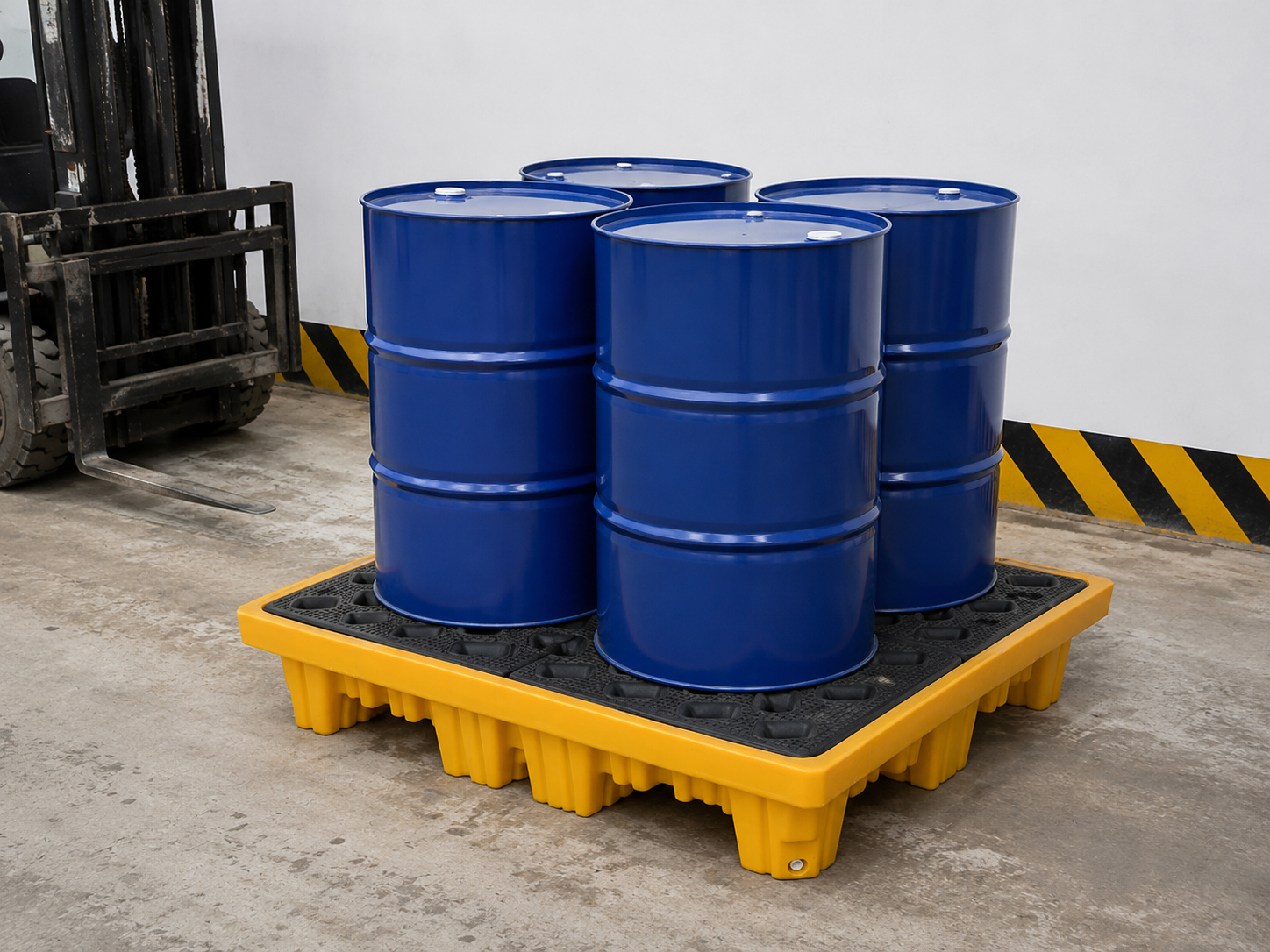
4 Drum Spill Pallet
Industrial 4 drum spill containment pallet for bulk drum storage in chemical warehouses, factories, lubricant storage areas, and hazardous liquid handling zones. Suitable for higher-volume storage where stronger load support and larger sump capacity are needed.
- Holds Four 55-Gallon Drums
- Larger Sump Capacity for Bulk Storage
- Removable Grate and Optional Drain Plug
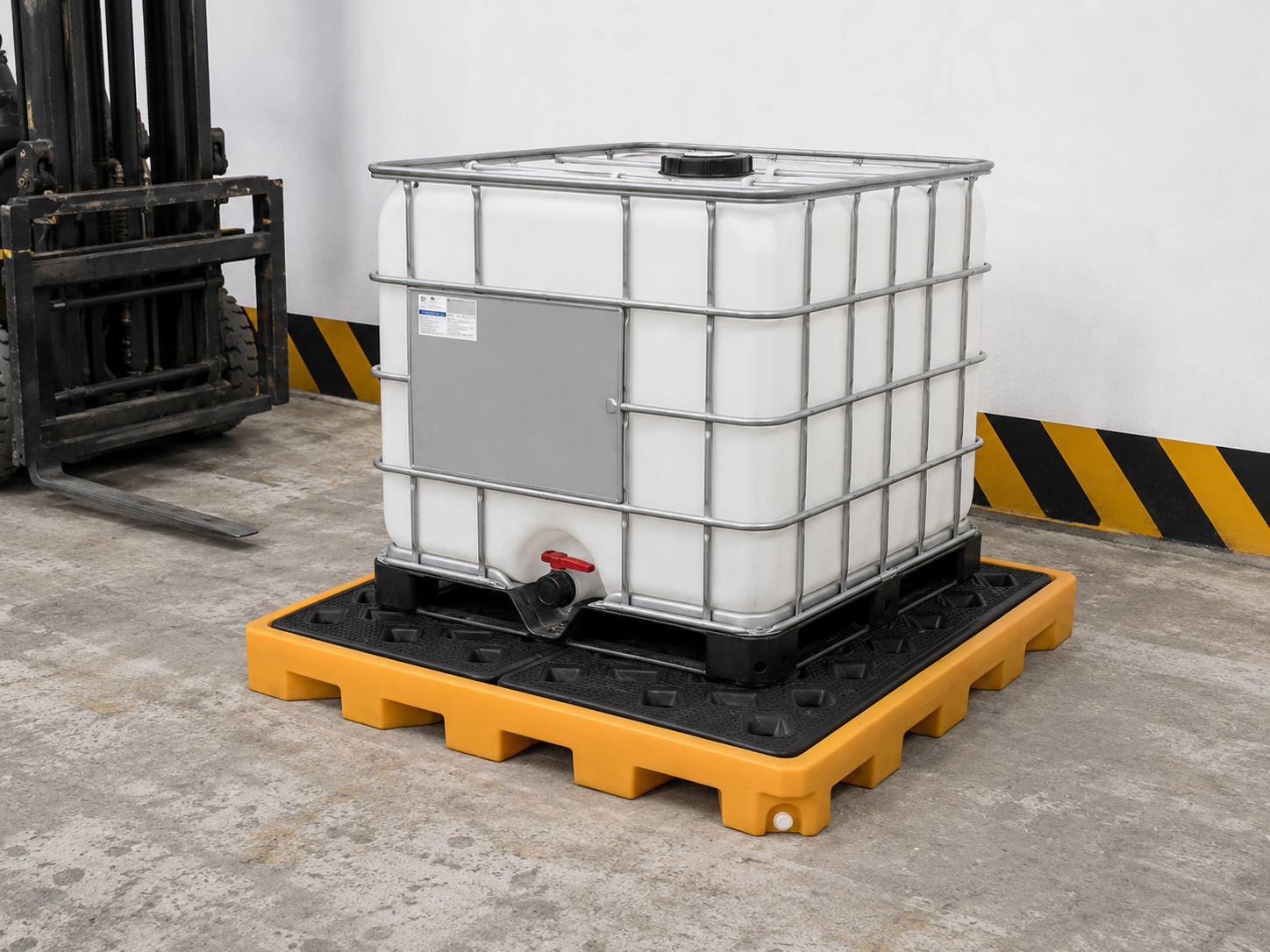
Low Profile Spill Deck
Low-profile spill deck designed for easier drum loading, liquid dispensing, and daily chemical handling. The lower working height helps operators move drums with less effort while still supporting local spill control.
- 1 Drum, 2 Drum, and 4 Drum Options
- Low Height for Easier Drum Handling
- Modular Design for Larger Storage Layouts
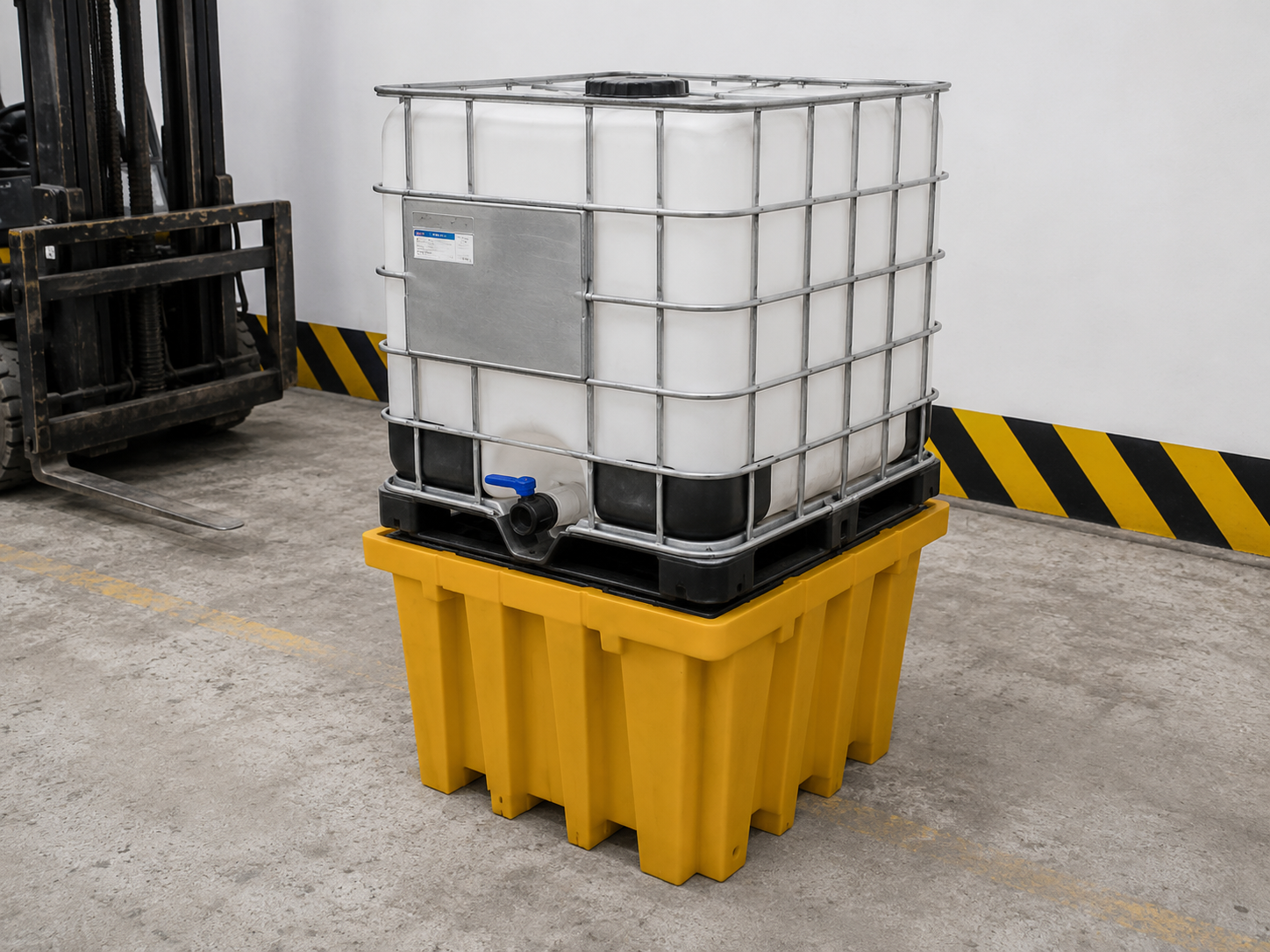
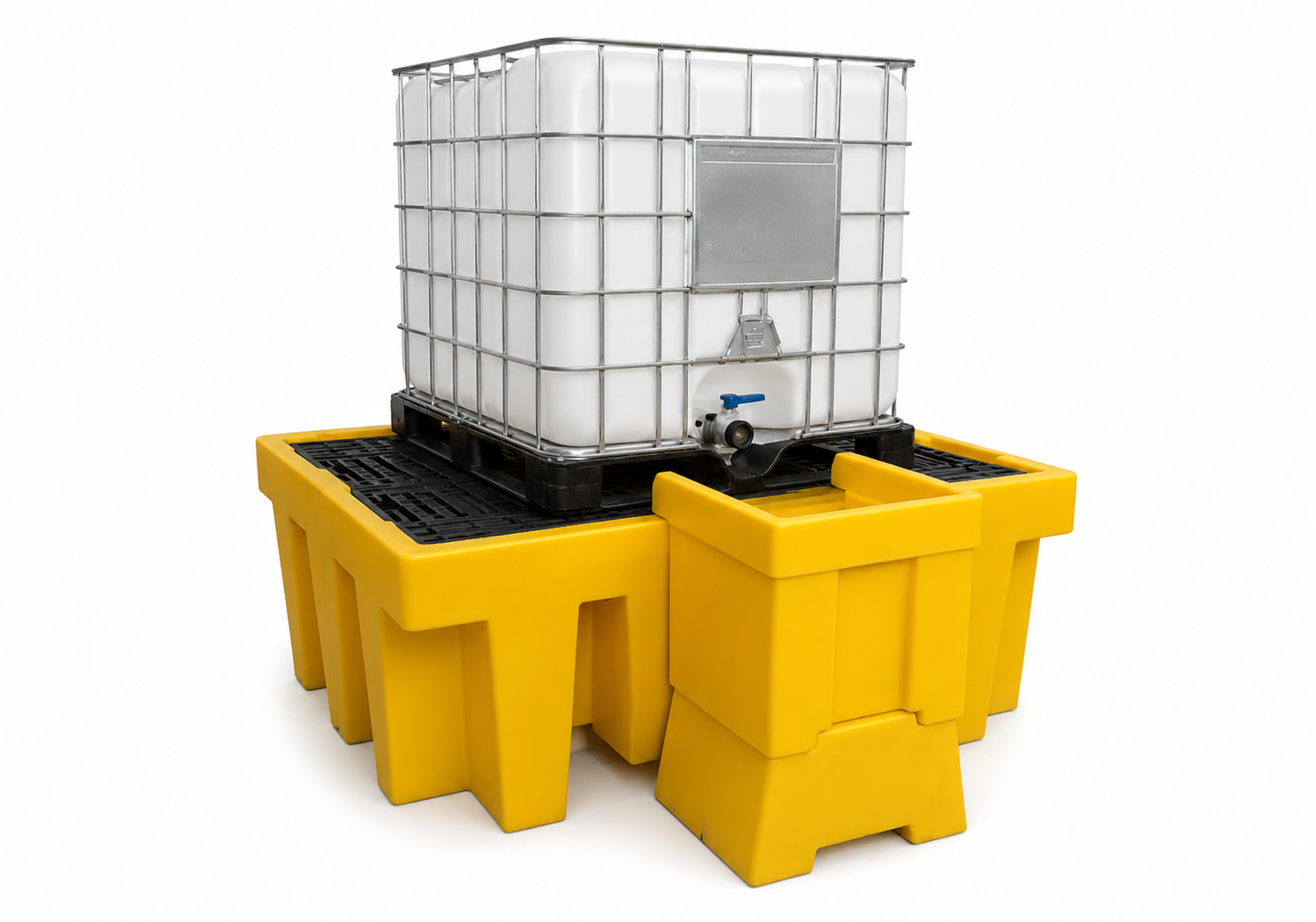
Single IBC Spill Pallet
HDPE IBC spill pallet built for one 275-gallon or 330-gallon IBC tote. The reinforced base supports large-volume liquid containers and helps contain leaks during storage, transfer, and handling.
- Fits One Standard IBC Tote
- Suitable for 275-Gallon and 330-Gallon IBCs
- Optional Drain Valve for Liquid Recovery
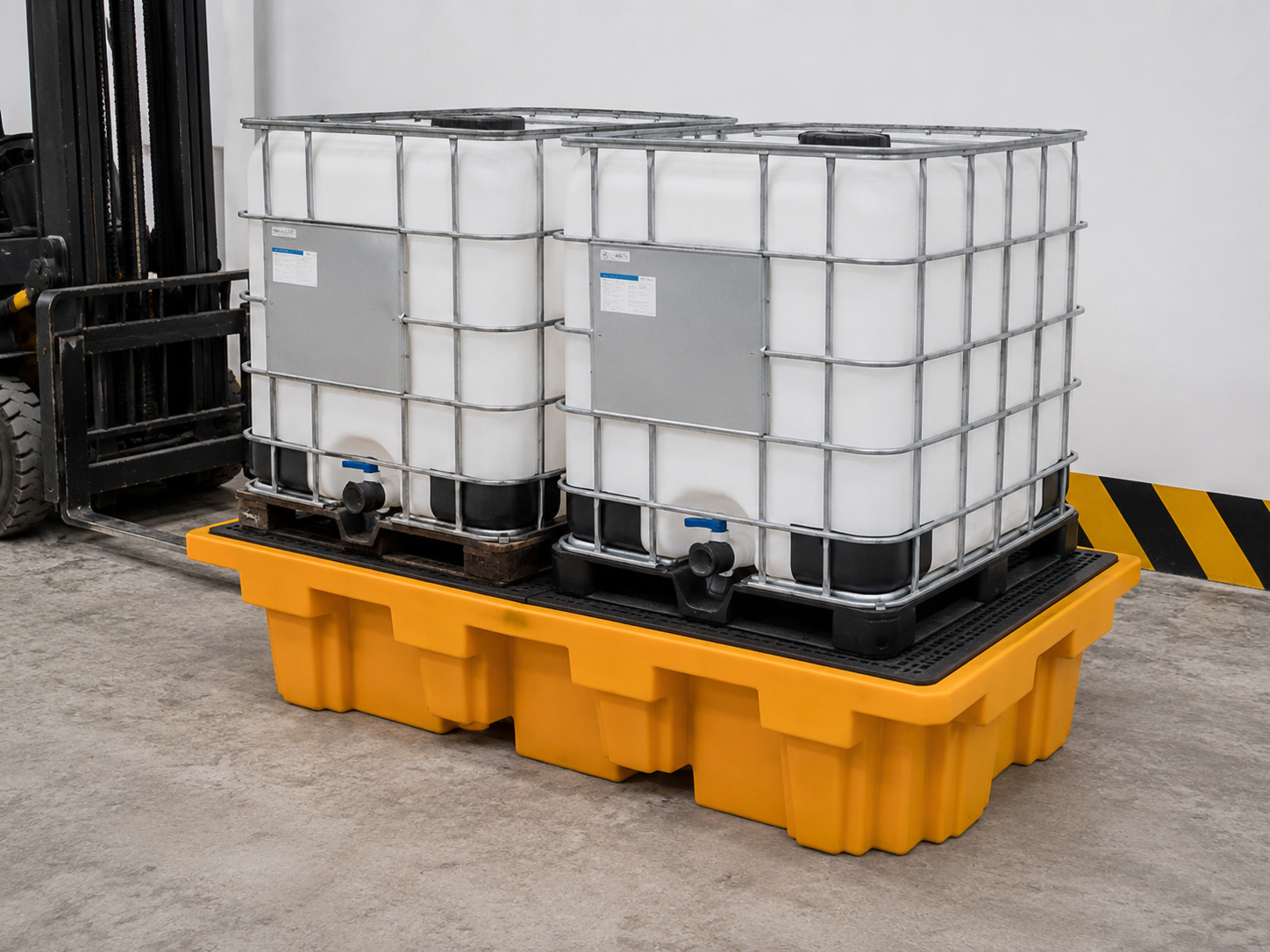
Double IBC Spill Pallet
Large HDPE spill containment pallet designed for two IBC totes or high-volume liquid storage areas. A reinforced sump structure and forklift access make it suitable for chemical plants, warehouses, and industrial storage zones.
- Holds Two IBC Totes
- Reinforced Base for Heavy Liquid Loads
- Forklift Access for Warehouse Handling
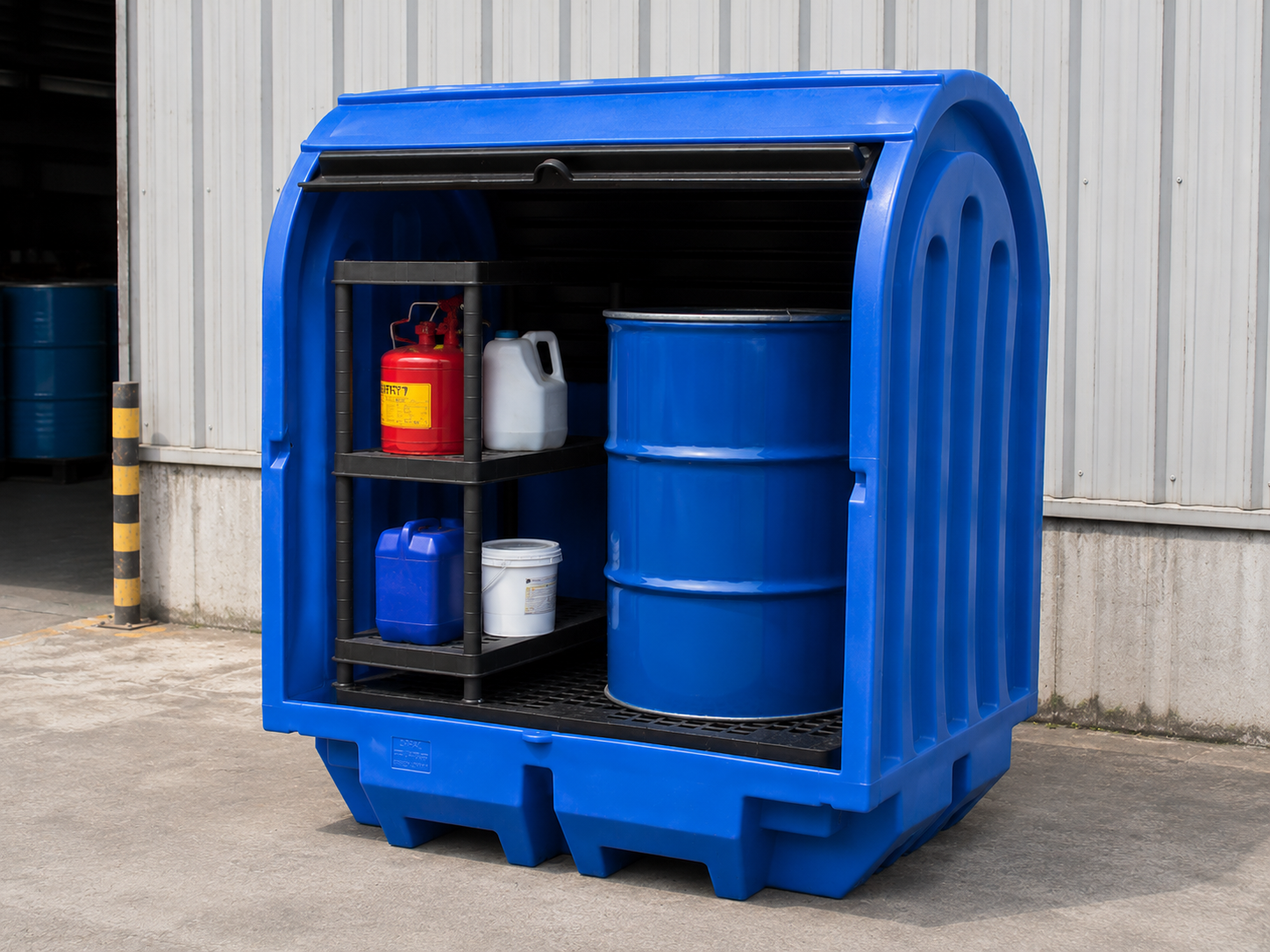
Covered Drum Spill Pallet
Covered drum spill pallet designed for indoor and outdoor chemical drum storage. The roofed structure helps protect drums from rain, dust, and direct exposure while the sump base supports secondary containment and leak control.
- Available for 2 Drum or 4 Drum Storage
- Roofed Design for Weather Protection
- Optional Door, Drain, and Locking Structure
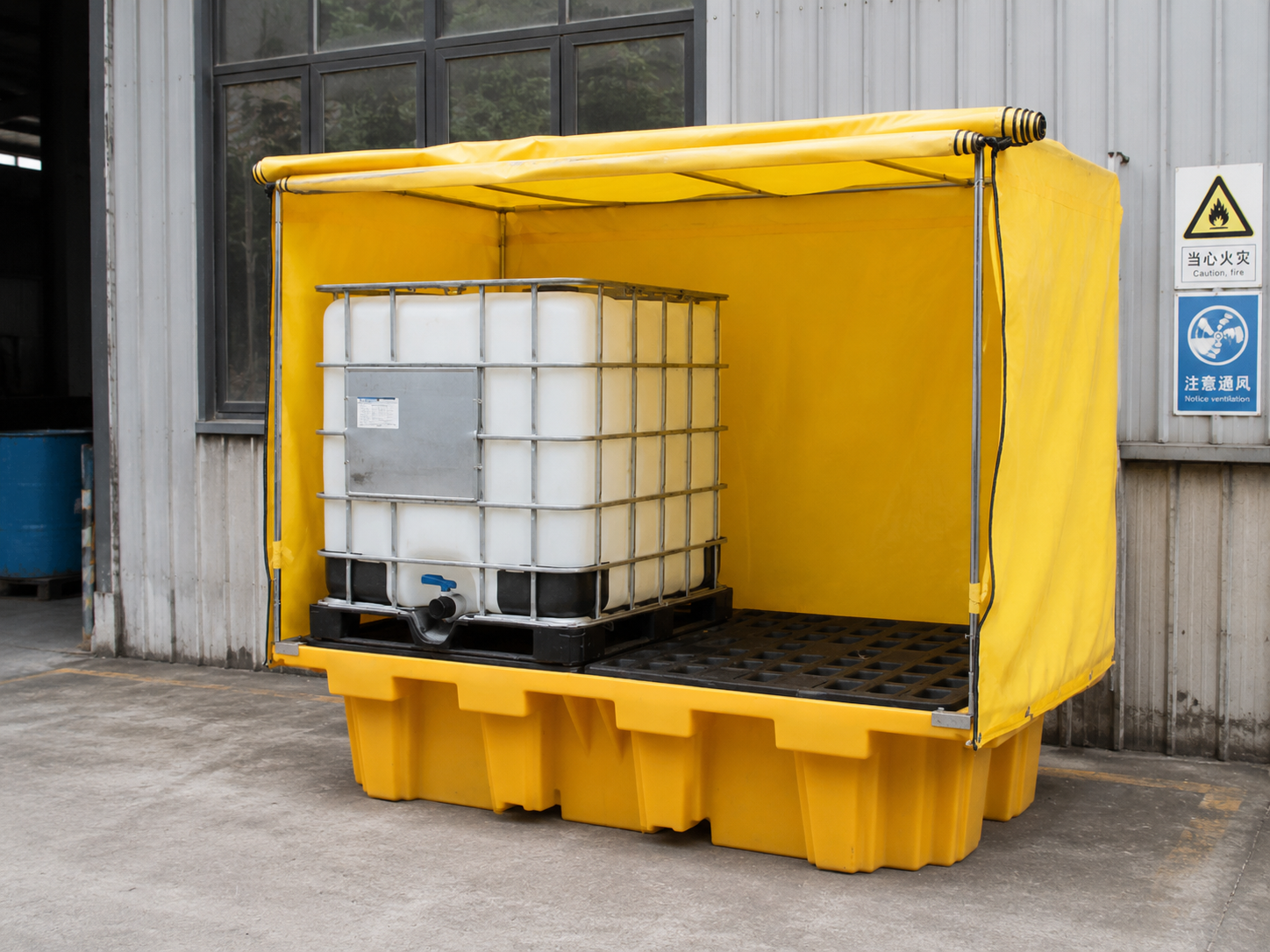
Covered IBC Spill Containment Station
Covered IBC spill containment station for outdoor IBC storage, chemical transfer areas, and bulk liquid handling. The HDPE sump base collects leaks, while the covered structure helps protect the IBC tank from weather exposure.
- Designed for Single or Double IBC Storage
- Roofed Protection for Outdoor Use
- Drain Valve and Forklift Access Options
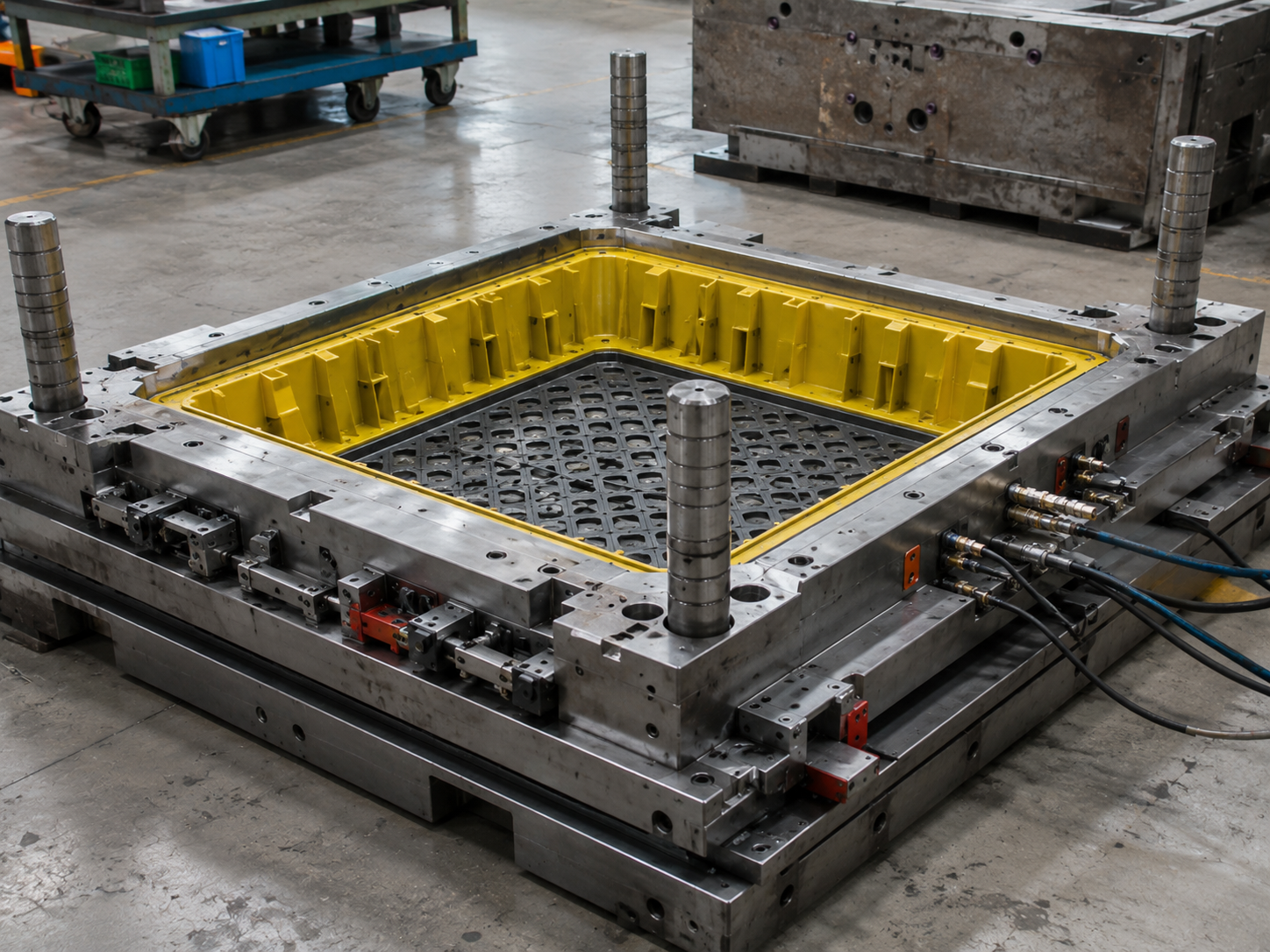
Custom Spill Containment Pallets
Custom HDPE spill containment pallets can be made for special drum layouts, IBC sizes, sump capacity requirements, colors, logos, and warehouse handling methods. Suitable for distributors, industrial buyers, and OEM projects.
- Custom Drum Quantity and Sump Volume
- Color Matching and Private-Label Branding
- OEM Mold Development and Bulk Export Supply
Need a custom configuration?
Tell us your drum quantity, drum size, IBC size, liquid type, required sump capacity, and forklift handling needs. We can help you choose a standard model or develop a custom HDPE spill containment pallet for your storage area.
INDUSTRIES WE SERVE WORLDWIDE
From chemical plants to logistics warehouses, our HDPE spill containment solutions help industrial buyers store drums, IBC tanks, and hazardous liquids with better leak control, cleaner work areas, and safer secondary containment.
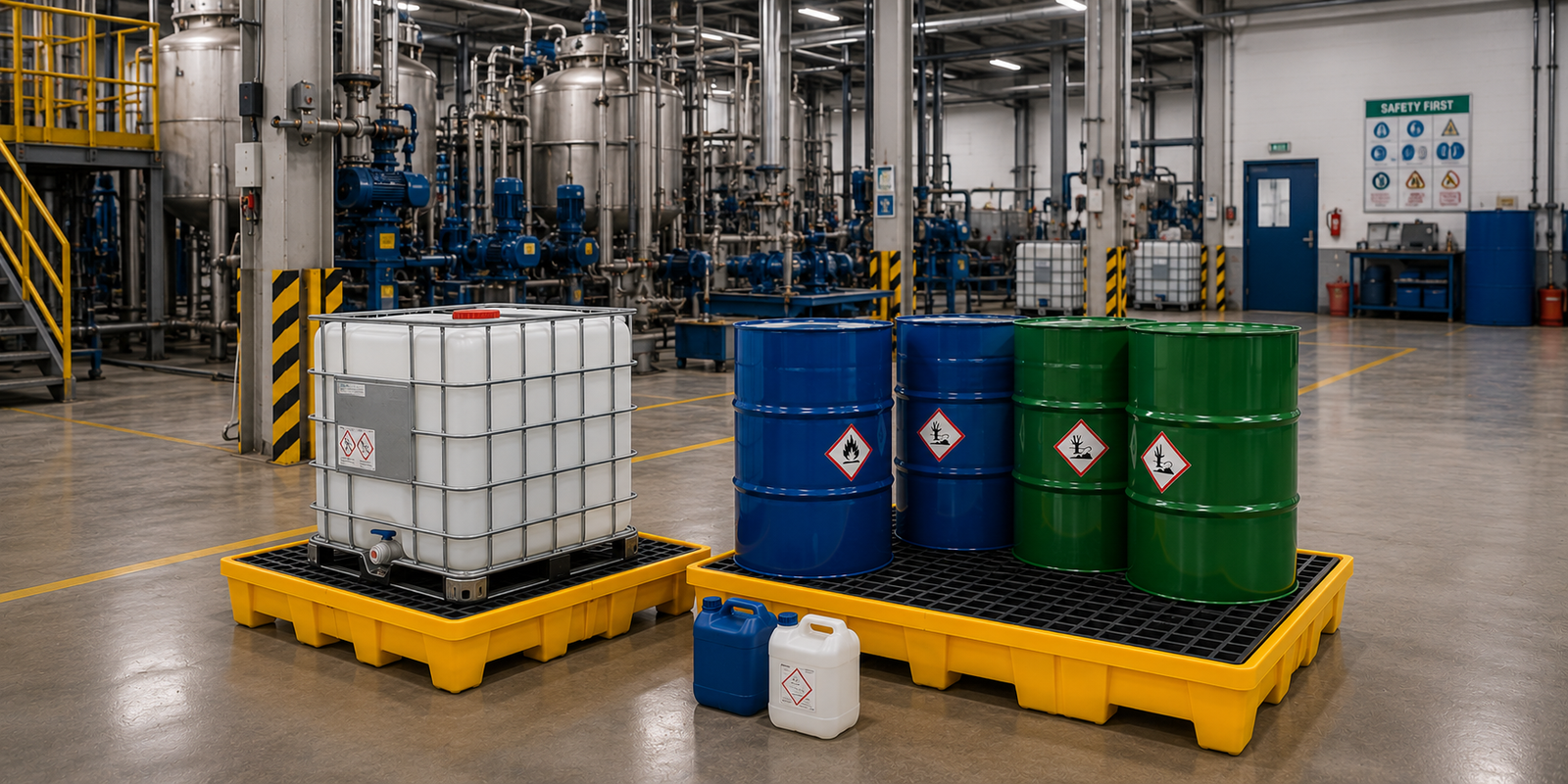
Chemical & Manufacturing
HDPE spill pallets and IBC containment systems for drum-packaged chemicals, lubricants, and process liquids -- containing leaks at the source and reducing floor contamination in workshops and storage rooms.
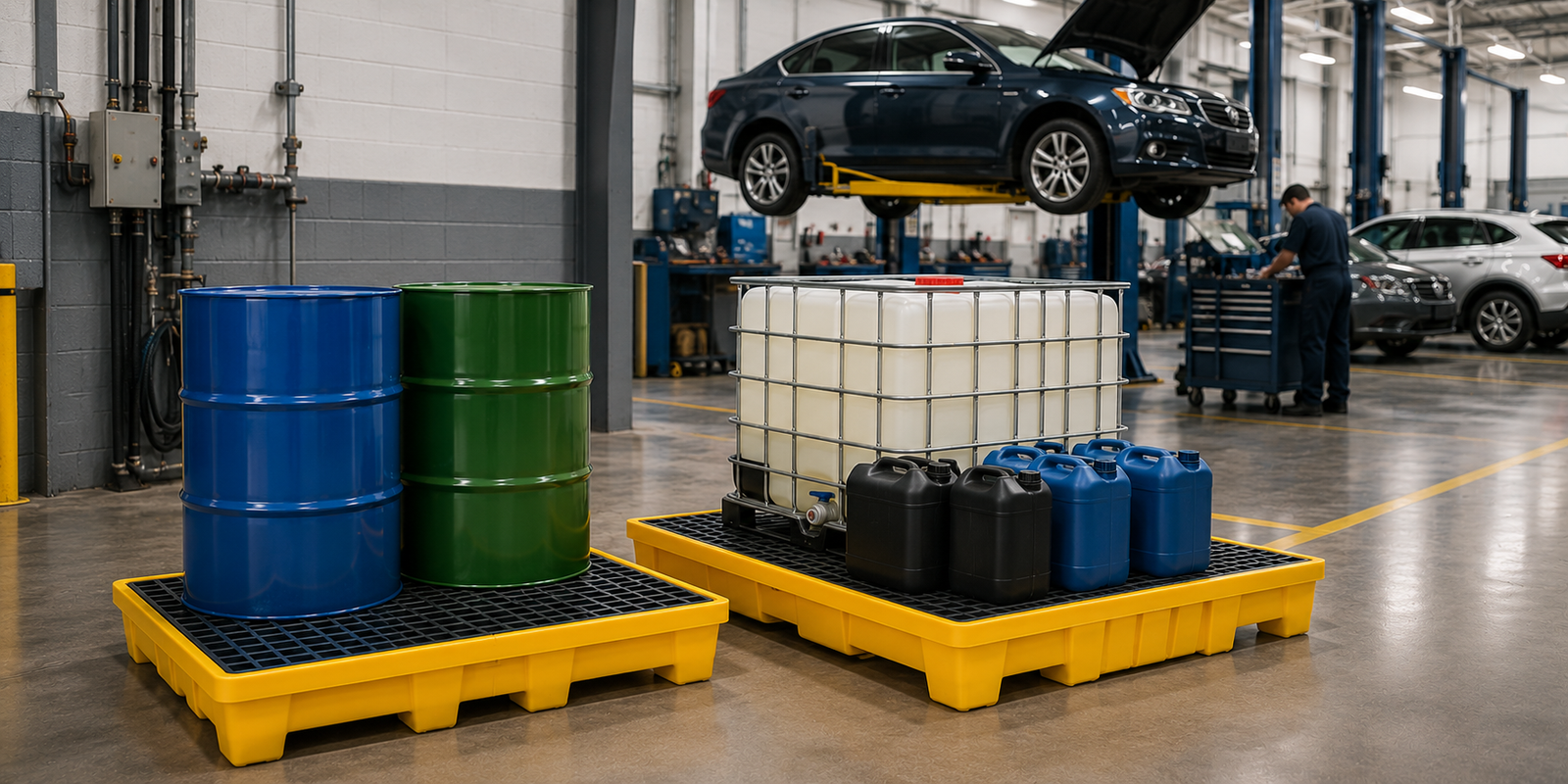
Energy & Automotive
Spill containment pallets for oil drums, hydraulic fluid, antifreeze, and maintenance liquids -- suitable for refineries, lubricant warehouses, service bays, and dealership maintenance workshops.
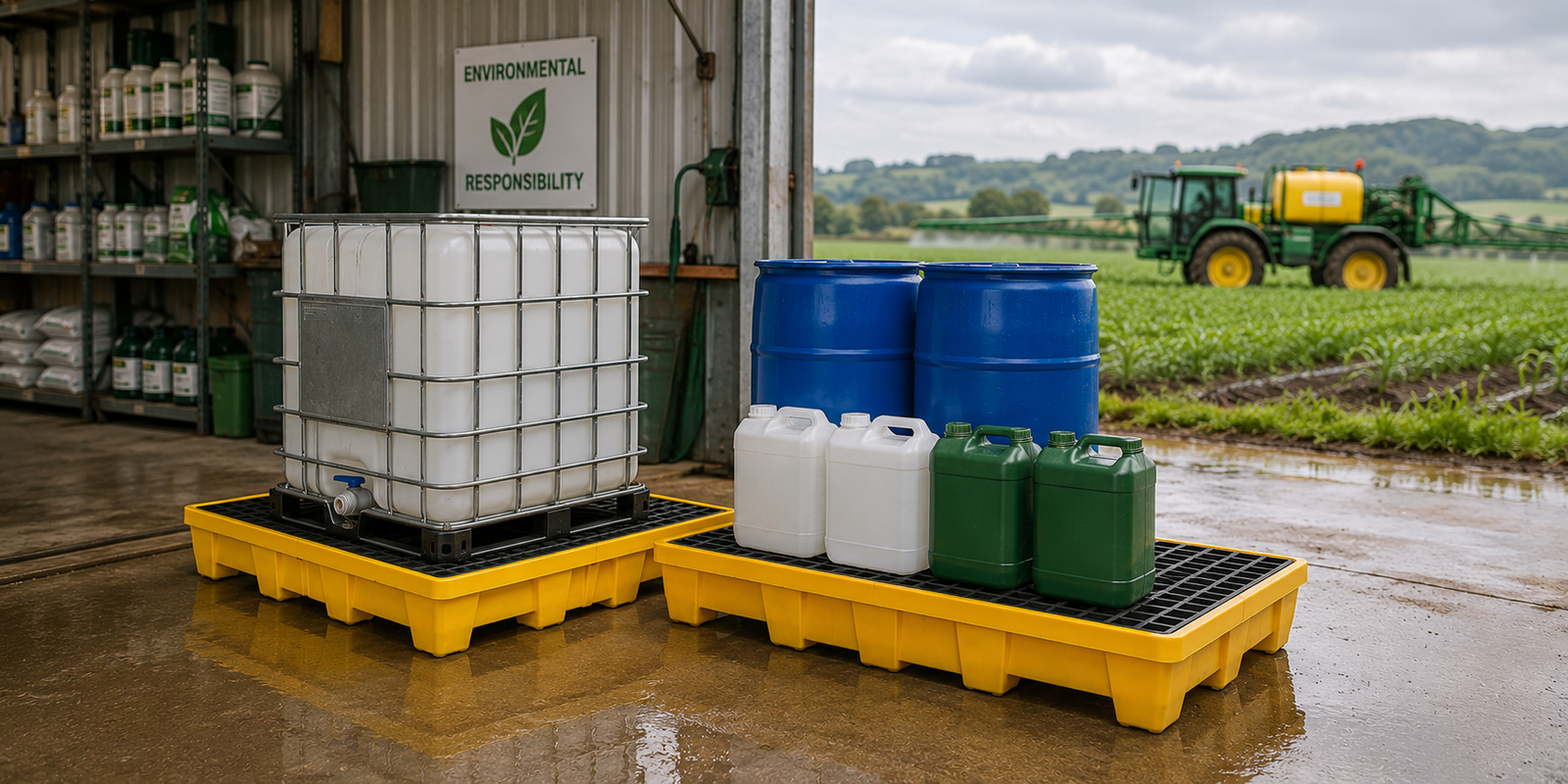
Agriculture & Environmental
Secondary containment for pesticide storage, fertilizer liquids, agricultural chemicals, and hazardous waste collection. HDPE sump pallets collect leaks and support safer liquid storage before spills reach the ground.
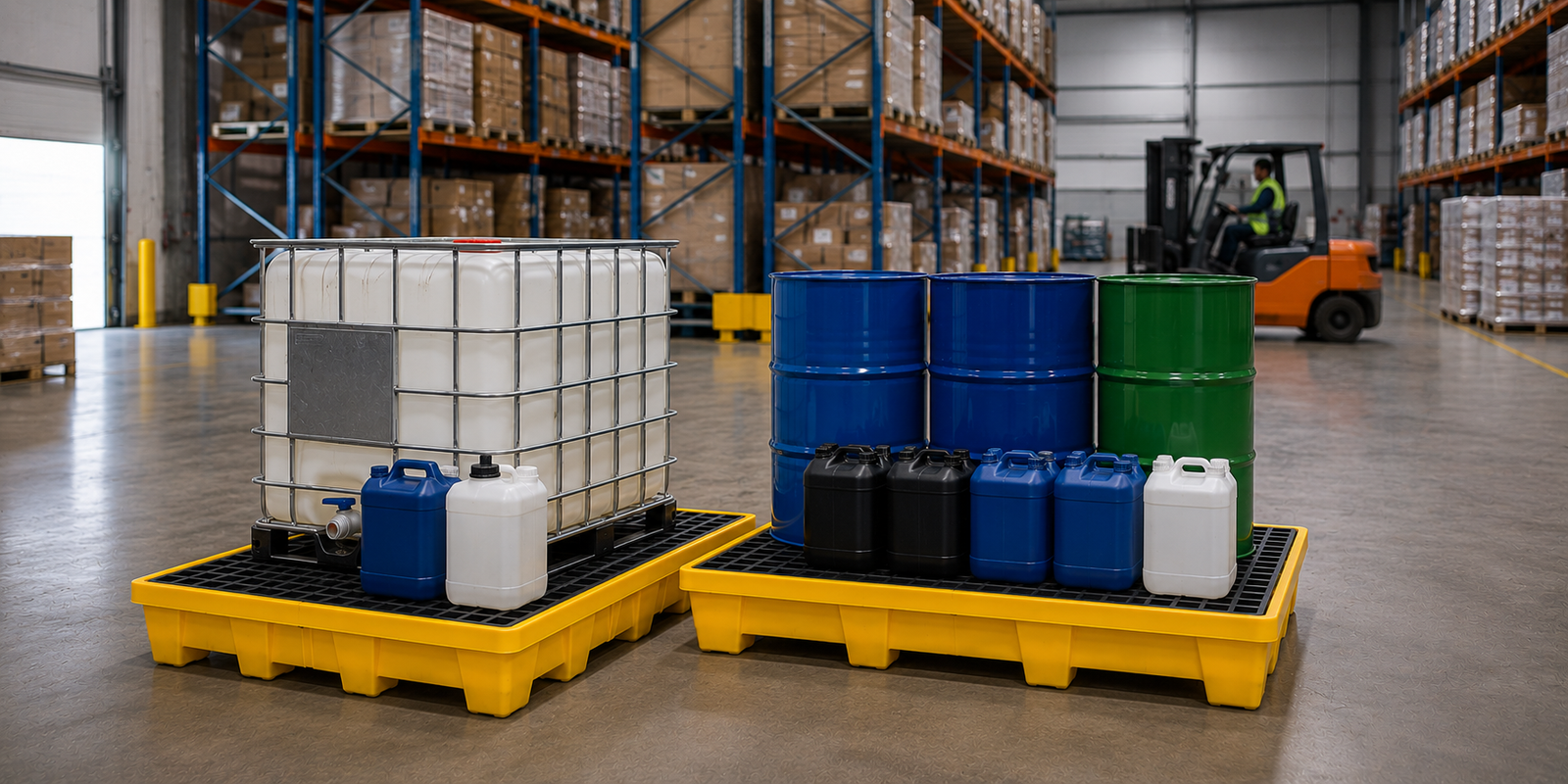
3PL Logistics & Warehousing
Forklift-compatible spill containment pallets for temporary chemical storage, transshipment hubs, bonded warehouses, and distribution centers. Stackable designs help logistics teams manage drum and IBC storage more efficiently.
Clients Served
Sectors
Renewal Rate
HOT-SELLING
SPILL PALLETS
Popular HDPE spill containment pallets for drum storage, IBC storage, chemical handling, oil storage, and industrial secondary containment. These models cover single drum, 2 drum, 4 drum, IBC, and multi-drum storage needs.
 Best Seller
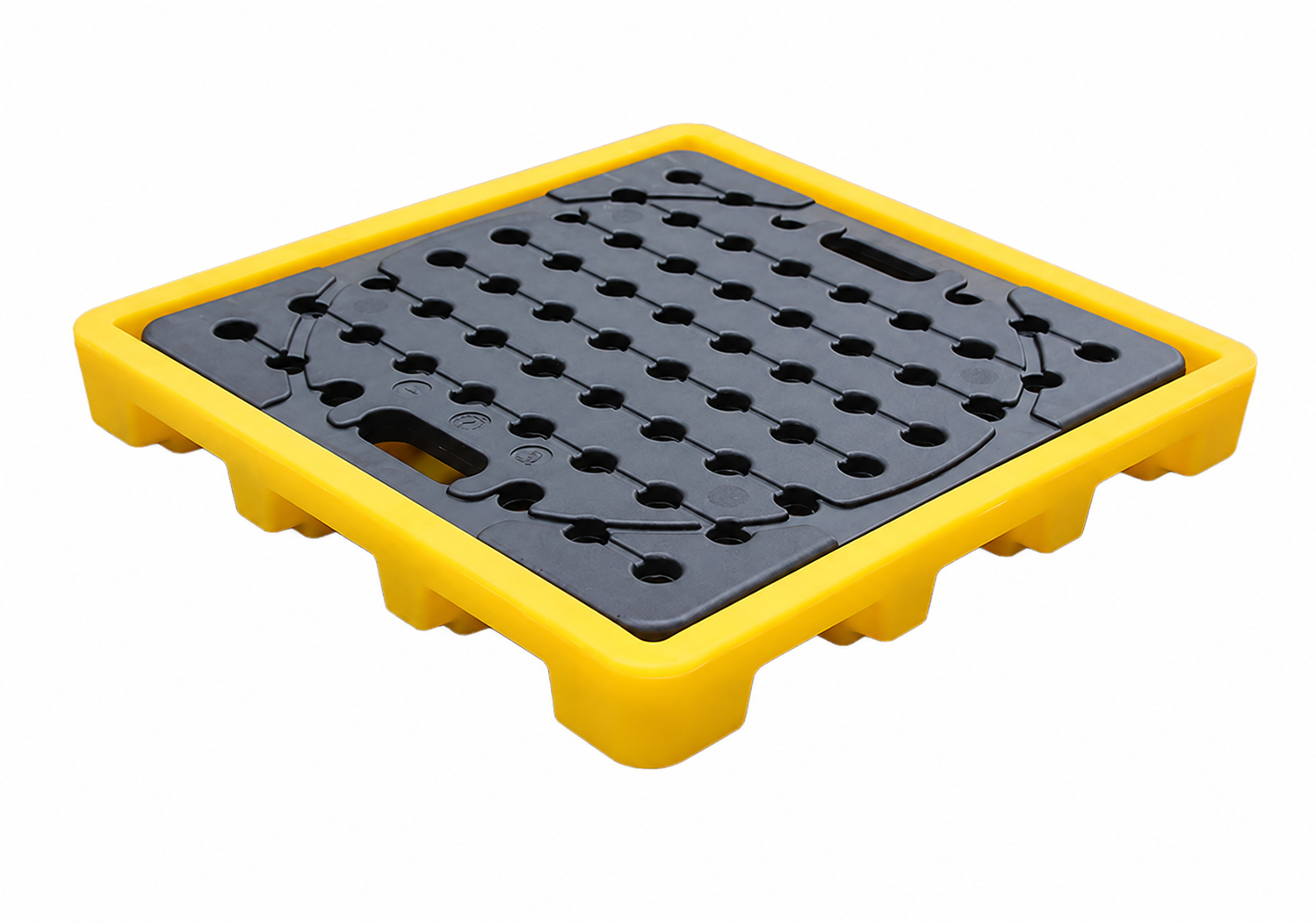
Single Drum Spill Pallet
Model: SDP-100
- Dimensions
- 680 × 680 × 240 mm
- Drum Count
- 1 × 200 L
- Capacity
- 66 Gal / 250 L
- Weight
- 8.5 kg
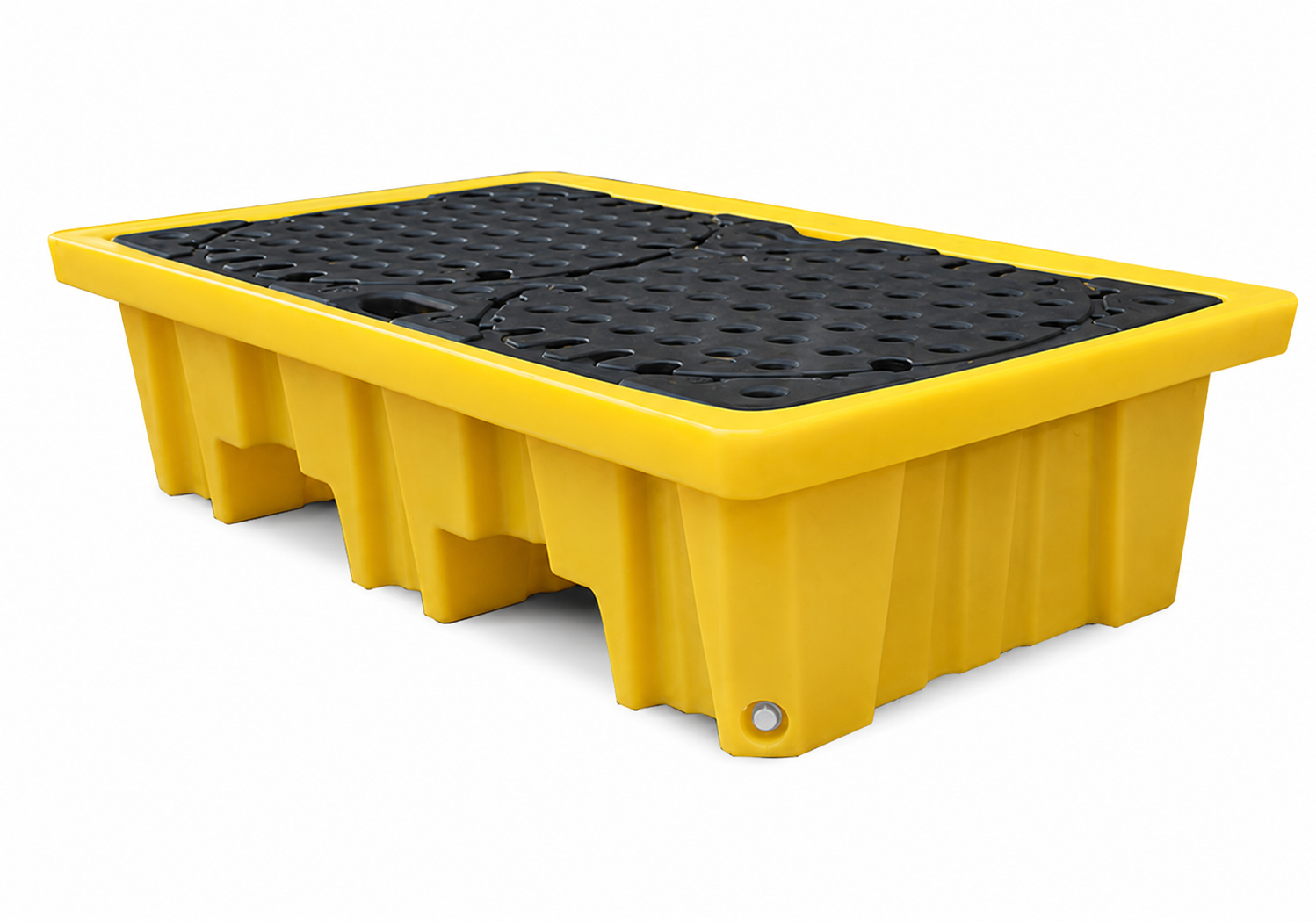
Double Drum Spill Pallet
Model: DDP-200
- Dimensions
- 1300 × 680 × 240 mm
- Drum Count
- 2 × 200 L
- Capacity
- 132 Gal / 500 L
- Weight
- 14.2 kg
 New
New
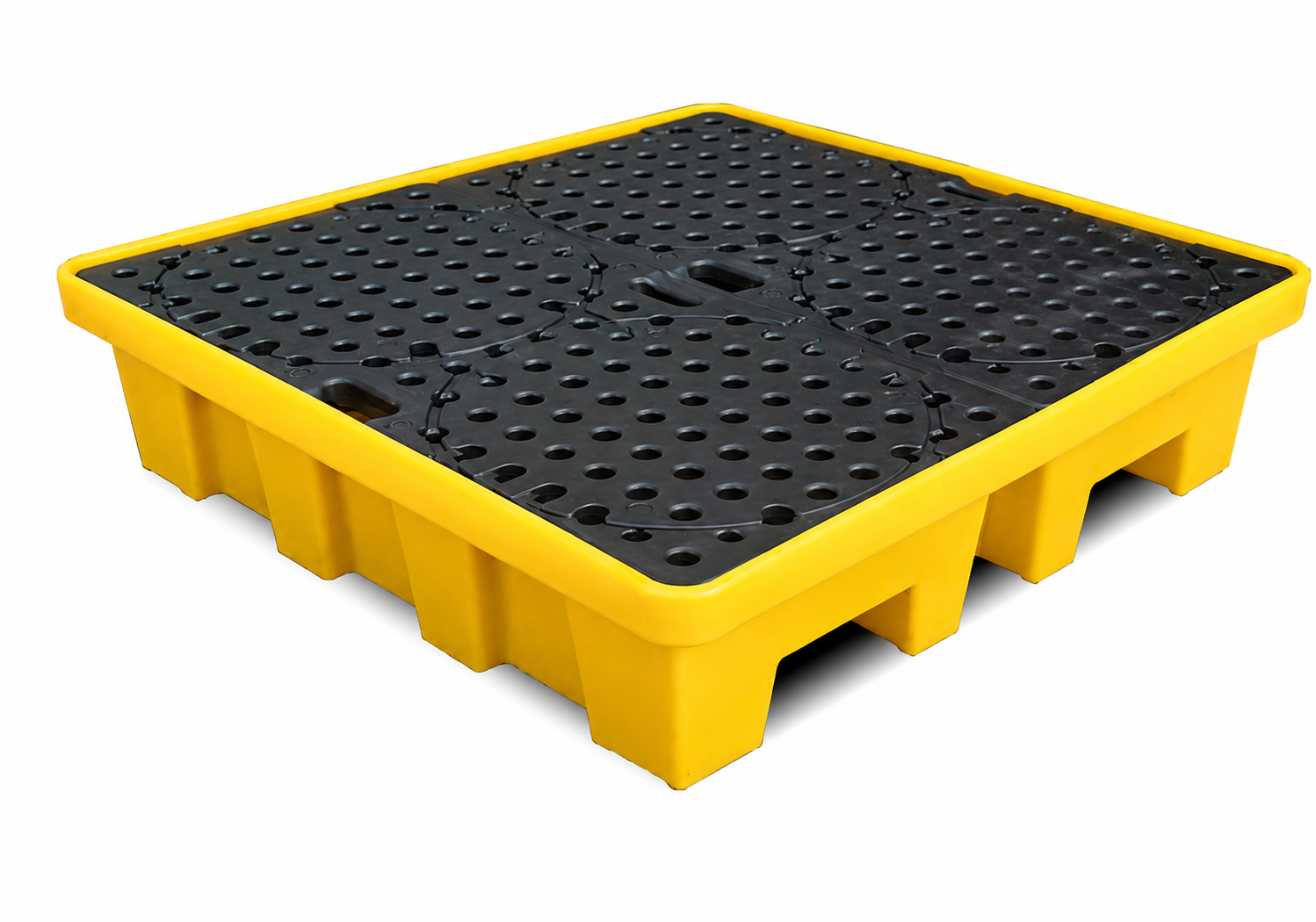
4-Drum Spill Pallet
Model: QDP-400
- Dimensions
- 1300 × 1300 × 240 mm
- Drum Count
- 4 × 200 L
- Capacity
- 264 Gal / 1000 L
- Weight
- 26.8 kg
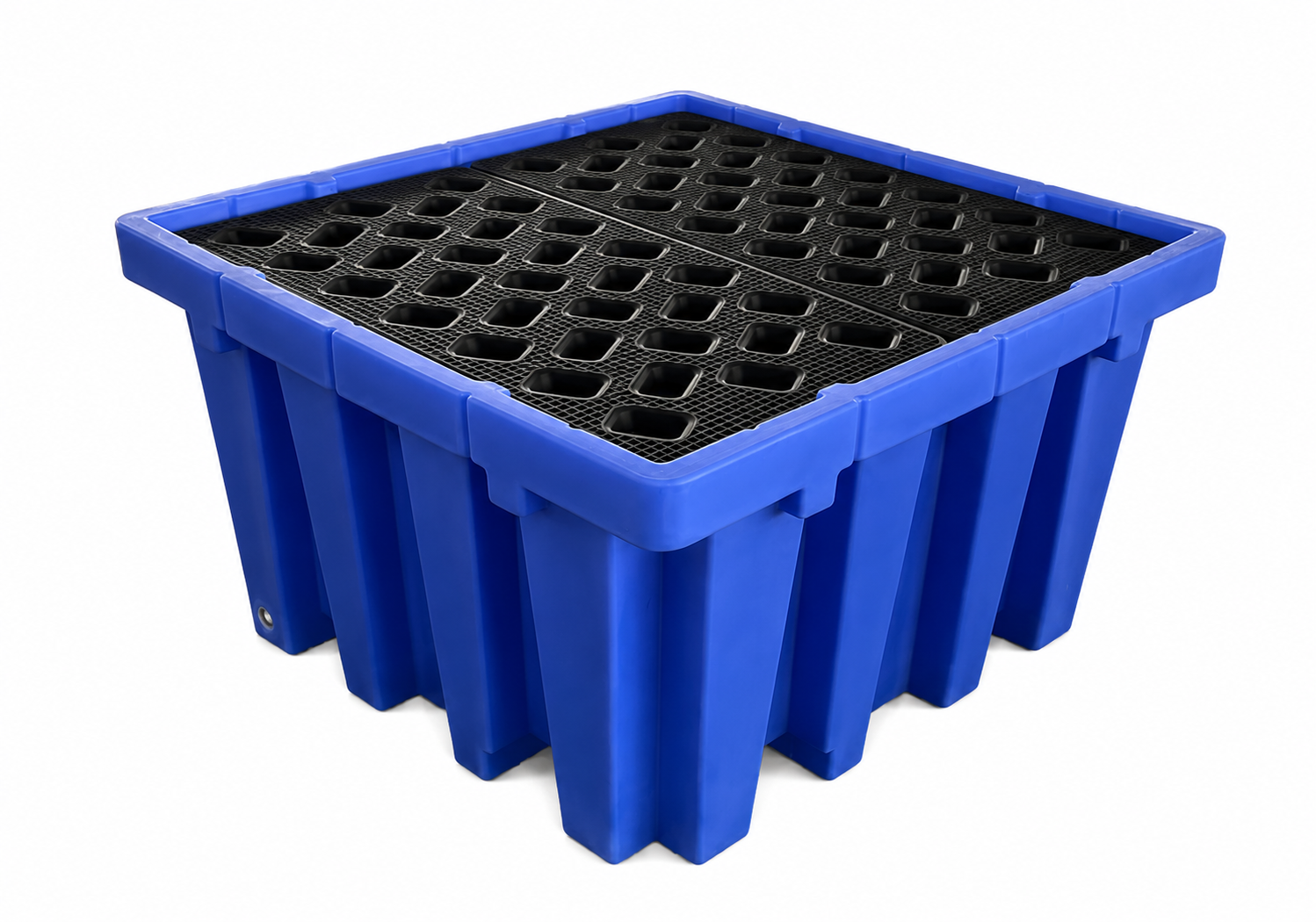 Best Seller
IBC Single Spill Pallet
Model: IBC-S1000
- Dimensions
- 1200 × 1000 × 280 mm
- Drum Count
- 1 × 1000 L IBC
- Capacity
- 275 Gal / 1040 L
- Weight
- 32.5 kg
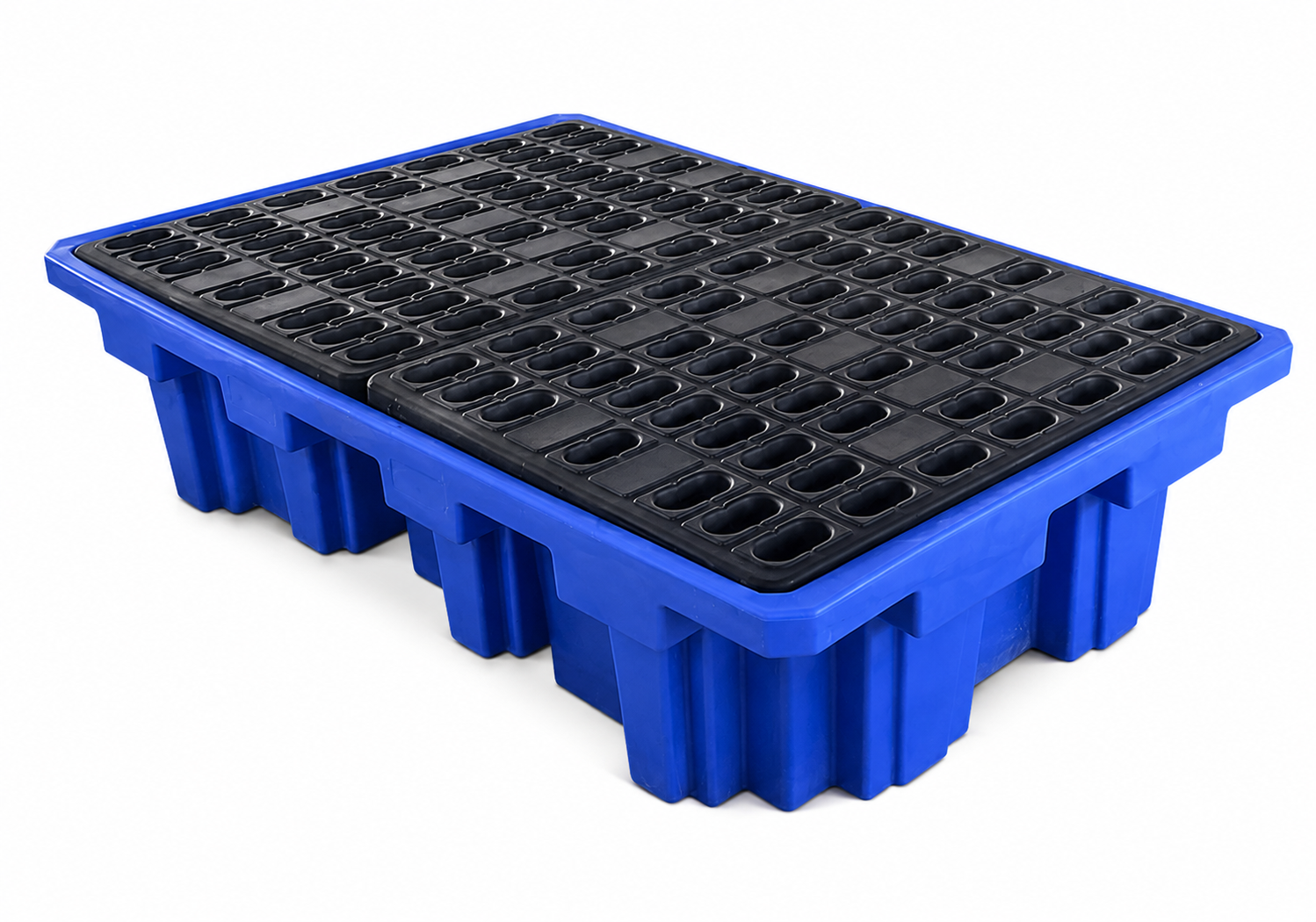
IBC Double Spill Pallet
Model: IBC-D2000
- Dimensions
- 2400 × 1000 × 280 mm
- Drum Count
- 2 × 1000 L IBC
- Capacity
- 550 Gal / 2080 L
- Weight
- 58.0 kg
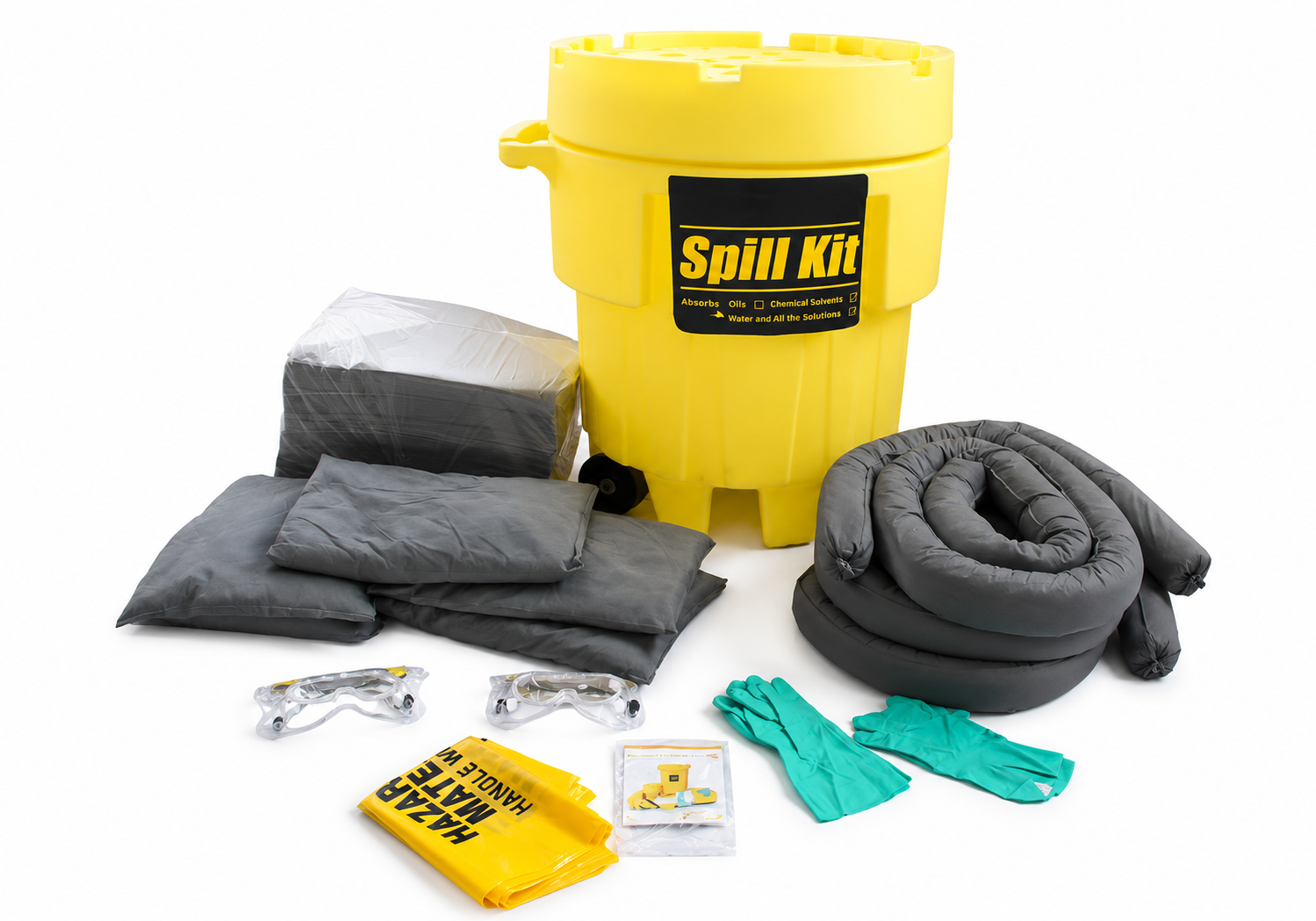
65-Gal Overpack Collection Drum
Model: OCD-65
- Dimensions
- Ø 640 × H 860 mm
- Drum Count
- 1 × 55-Gal Drum
- Capacity
- 65 Gal / 246 L
- Weight
- 11.0 kg
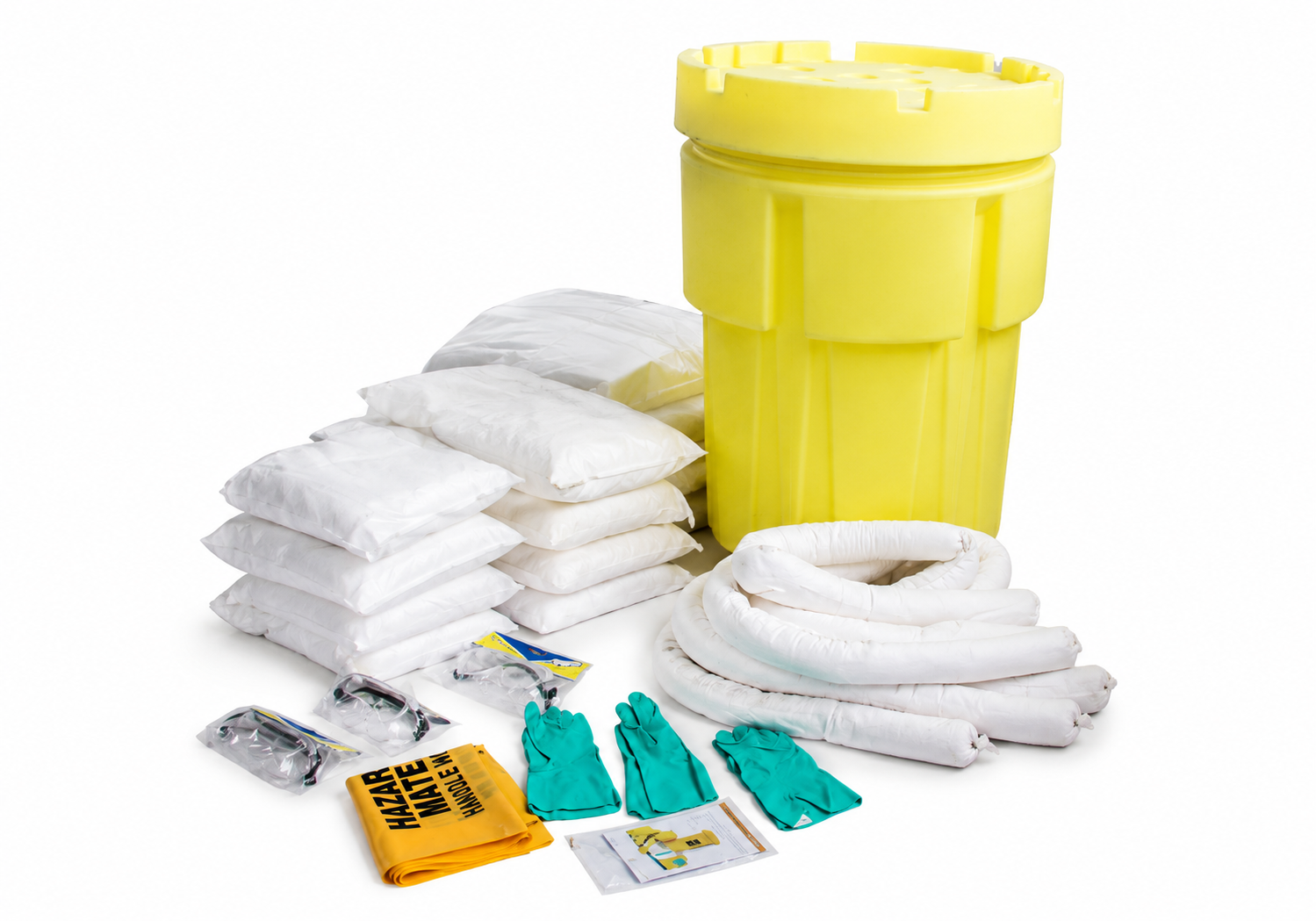 Best Seller
95-Gal Overpack Collection Drum
Model: OCD-95
- Dimensions
- Ø 720 × H 960 mm
- Drum Count
- 1 × 85-Gal Drum
- Capacity
- 95 Gal / 360 L
- Weight
- 15.5 kg
 New
New
Covered Spill Containment Station
Model: CSS-4D
- Dimensions
- 1500 × 1300 × 1800 mm
- Drum Count
- 4 × 200 L
- Capacity
- 264 Gal / 1000 L
- Weight
- 48.0 kg
WHY INDUSTRIAL BUYERS USE SPILL PALLETS
In facilities that store oils, chemicals, solvents, and other industrial liquids, even small leaks can create floor contamination, safety risks, and costly cleanup work. HDPE spill pallets help contain leaks at the storage point and support safer secondary containment for drums, IBC tanks, and chemical containers.
Stop Leaks & Drips from Reaching the Floor
Drums, IBC tanks, and chemical containers may leak from valves, seams, caps, or during routine handling. Without a spill pallet underneath, liquid can spread across the floor, enter drainage areas, or contaminate nearby storage zones. HDPE spill containment pallets help collect incidental leaks and slow drips before they become a larger cleanup problem.
Reduce Slip Hazards & Floor Damage
Oil, solvents, and chemical liquids on open floors can create slip risks and damage concrete surfaces over time. Spill pallets keep liquid inside the sump area and away from foot traffic and forklift paths. Removable anti-slip grates also help keep drums raised above collected liquid during storage and handling.
Support Secondary Containment Planning
Many industrial storage sites need a clear secondary containment plan for oils, chemicals, and hazardous liquids. Spill pallets provide a ready-to-use containment base for drums and IBC tanks without building a fixed bunded area. Buyers can choose models based on drum quantity, IBC size, sump capacity, and local storage requirements.
Organize Drums, IBCs & Chemical Containers
Scattered oil drums, solvent cans, and IBC tanks make leak checks harder and increase storage risk. Spill containment pallets create defined storage positions for liquid containers, helping teams group products by type, volume, or risk level. This makes daily inspection, leak detection, and warehouse management more efficient.
Built for Forklifts, Cleanouts & Daily Operations
Selected models include forklift entry, removable grates, and stackable designs for easier handling, sump cleaning, and empty storage. Workers can move suitable models with forklifts or pallet jacks, remove the grating for cleaning, and use different pallet sizes for single drum, 2 drum, 4 drum, IBC, or small-container storage.
One Pallet. Five Problems Solved.
From small oil drum trays to 4 drum spill pallets and IBC spill containment pallets, our HDPE spill pallet range helps industrial buyers improve liquid storage, reduce cleanup work, and build safer chemical handling areas.
BUILT-IN SUMP CAPACITY FOR
SECONDARY CONTAINMENT PLANNING
Spill pallets serve as secondary containment systems for industrial drum and IBC storage. Selecting the correct sump capacity is a regulatory requirement -- not just a best practice.
eCFR 40 CFR 264.175 -- Secondary Containment Requirement
"The containment system must have sufficient capacity to contain 10% of the volume of containers or the volume of the largest container, whichever is greater."
Source: U.S. Electronic Code of Federal Regulations · 40 CFR Part 264.175
What This Means for Your Storage Setup
Whether you store standard 200 L (55 gal) drums or 1,000 L IBCs, your secondary containment pallet must hold enough volume to prevent environmental contamination in the event of a spill, leak, or container failure. Non-compliance can result in EPA enforcement actions and significant fines under RCRA hazardous waste regulations.
Single Drum Storage
A single 200 L drum requires a minimum sump of 20 L (10% of 200 L). Most of our single-drum pallets provide 66-110 L sump capacity -- well above the regulatory threshold.
Multi-Drum Storage (e.g. 4 × 200 L)
Four drums total 800 L. 10% = 80 L required. The largest single container = 200 L (10% = 20 L). The greater value is 80 L -- your pallet sump must meet or exceed this.
IBC Tote Storage (1,000 L)
A single IBC tote requires a minimum sump of 100 L (10% of 1,000 L). Our IBC spill pallets are designed with 225-450 L sump volumes to provide substantial safety margins.
Our Pallet Sump Capacity Reference
| Pallet Type | Sump Capacity | Max Load |
|---|---|---|
| Single Drum Pallet | 66 L | 1 × 200 L drum |
| Double Drum Pallet | 110 L | 2 × 200 L drums |
| 4-Drum Pallet (Low Profile) | 225 L | 4 × 200 L drums |
| IBC Single Pallet | 225 L | 1 × 1,000 L IBC |
| IBC Double Pallet | 450 L | 2 × 1,000 L IBC |
* Sump capacities are nominal values. Consult product datasheets for certified measurements.
Sump Capacity Calculator
40 CFR 264.175 Compliance Check
Regulatory Formula
Required Capacity = MAX (10% of total volume, 10% of largest single container)
Standard 55-gal drum ≈ 208 L · Standard IBC = 1,000 L
This calculator provides estimates based on 40 CFR 264.175 formula.
Always verify with your environmental compliance officer.
POLYETHYLENE SPILL PALLETS
BUILT FOR CHEMICAL STORAGE
Our HDPE spill containment pallets are designed for chemical drum storage, oil handling, IBC storage, and industrial liquid leak control. From compact single-drum trays to deep-sump IBC spill pallets, each model is built around practical secondary containment, easier handling, and simpler cleaning.
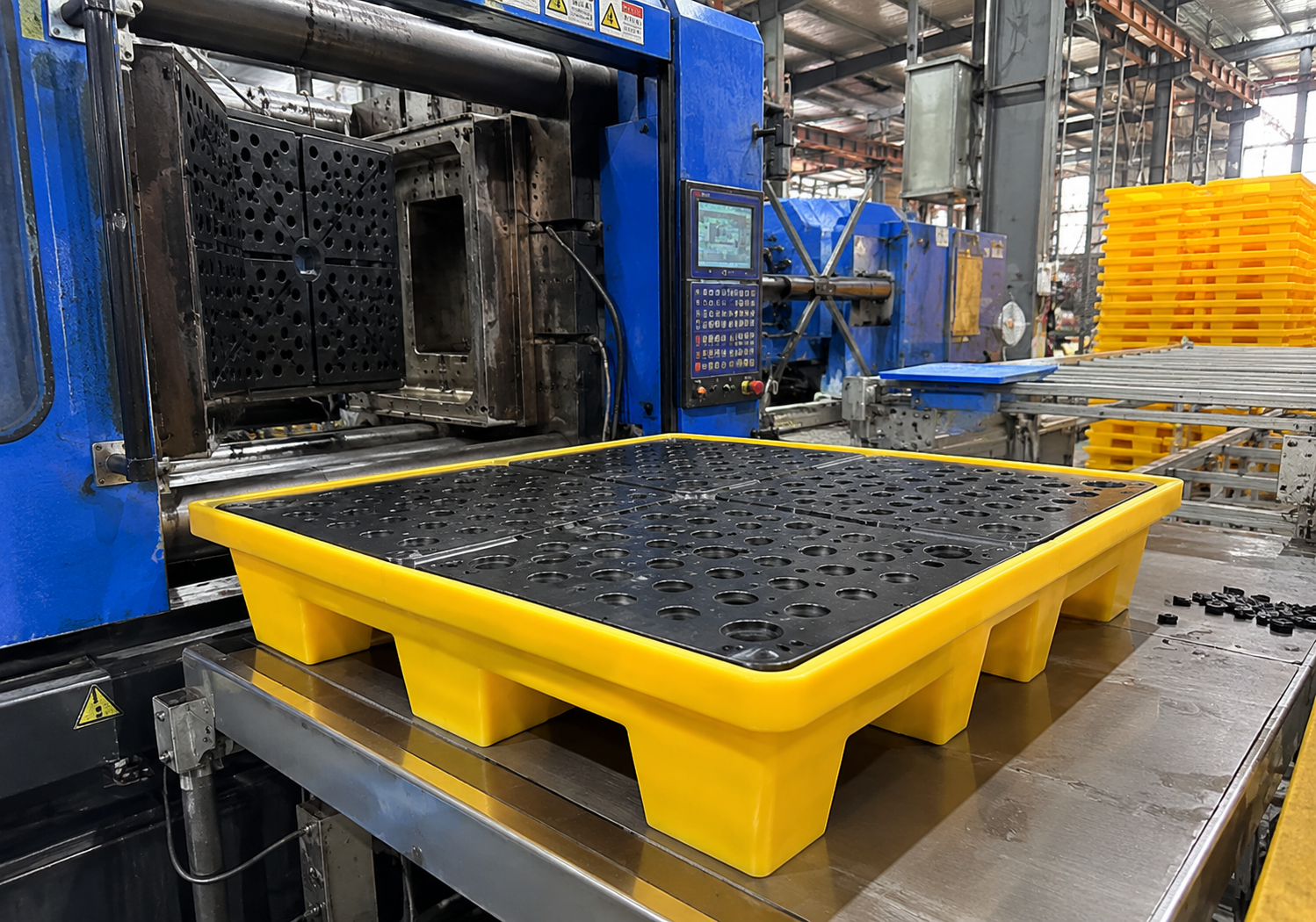
100% HDPE · One-Piece Molded
Material Specification
HDPE
High-Density
Polyethylene
<0.1%
Defect Rate
Per Batch
200L+
Full-Load
Containment
HDPE / Polyethylene Body
Core MaterialHigh-density polyethylene provides strong resistance to water, rust, corrosion, oils, cleaning liquids, and many mild acids or alkalis. Compared with steel spill containment products, HDPE spill pallets are lighter, easier to clean, and better suited for wet chemical storage areas.
Removable Grating
MaintenanceLift-out grating panels give direct access to the sump interior for fast cleanup of collected spills. Reduces maintenance downtime significantly -- a critical advantage in high-throughput chemical storage facilities.
Forklift Pockets
HandlingDual-entry forklift channels allow loaded and empty handling from two sides, compatible with standard warehouse forklifts and pallet jacks. Streamlines repositioning, loading dock operations, and inter-facility transfers.
Drain Plug Option
OptionalIntegrated drain plug enables controlled liquid evacuation from the sump -- essential for facilities with regular spill cleanup cycles. Optional ramp accessory available for drum-trolley access and liquid transfer workflows.
Anti-Skid Grating
SafetyTextured grating surface prevents drum base slippage during storage and handling. Maintains drum positioning stability under full-load conditions -- reducing tip-over risk and improving overall site safety compliance.
Compliance Ready
All structural features are designed to meet or exceed EPA 40 CFR 264.175, SPCC, and NPDES secondary containment requirements. ISO 9001-certified production with triple-stage QC validation per batch.
SPILL PALLET
FAQ
Everything you need to know about spill containment pallets -- from selection and sizing to customization and compliance.
What is a spill pallet?
What is a spill pallet?
A spill pallet (also called a secondary containment pallet) is an industrial platform with a built-in sump basin beneath a removable grating. It is designed to safely store drums, IBCs, oils, chemicals, and other hazardous liquids -- capturing any leaks or spills before they reach the floor or environment. Spill pallets are a core component of SPCC and EPA secondary containment compliance programs.
What is the difference between a spill pallet and a spill deck?
What is the difference between a spill pallet and a spill deck?
While the two terms are sometimes used interchangeably, there are key structural differences:
Spill Pallet
- Deeper sump for higher containment volume
- Built for drum or IBC storage
- Heavier load-bearing capacity
Spill Deck
- Lower-profile, easier to step onto
- Creates a working containment area
- Suitable for smaller containers or walk-on use
How do I choose the right sump capacity for my spill pallet?
How do I choose the right sump capacity for my spill pallet?
Selecting the correct sump capacity involves two key steps:
-
1
Identify your largest single container
The sump must be able to hold 100% of the volume of the largest container stored on the pallet -- typically a 200L drum or 1,000L IBC.
-
2
Check local regulatory requirements
EPA SPCC regulations typically require secondary containment of 110% of the largest container's capacity. Always verify with your local environmental authority before purchasing.
Pro tip: Our engineering team provides free sump sizing consultations -- contact us with your container specs and we'll recommend the right product.
Can spill pallets be moved by forklift when loaded?
Can spill pallets be moved by forklift when loaded?
Most of our spill pallets feature dual-entry forklift pockets for convenient repositioning. However, there are important operational considerations:
Check the rated load capacity -- confirm the pallet's structural rating covers the combined weight of the pallet, containers, and liquid contents.
Some models are rated for empty movement only -- always refer to the product datasheet for dynamic vs. static load ratings.
Our high-profile IBC pallets support forklift entry from two sides and are rated for loaded movement -- ideal for active warehouse environments.
Can you customize spill pallets for specific requirements?
Can you customize spill pallets for specific requirements?
Absolutely. With 20+ years of HDPE manufacturing expertise and 50+ patents, we support a full range of custom configurations:
Minimum order quantities apply for custom production runs. Our team will provide a free design consultation and 72-hour sample turnaround so you can validate the spec before committing to full production.
Still have questions?
Our containment specialists respond within 24 hours.
REQUEST A FREE QUOTE
Fill in your requirements below and our technical team will respond within 24 hours with a tailored solution and competitive pricing.